The Ecology of Simple Living
by Linus Dolfini
Bangkok, May 21, 2026
This article is based on a visit to the Santi Asoke community in the northeast of Bangkok where we were welcomed by temple staff and Bhikkhunis who introduced us to Santi Asoke’s work and their way of practicing, showed us around the temple’s facilities and sat down for a short interview.
Santi Asoke is the name of an ascetic Buddhist sect that was established in Thailand in the 1970s by a monk called Phra Bodhirak. Originally, Phra Bodhirak was a popular television entertainer and singer who later on in his life decided to follow a different path and ordain as a monk. In the 1960s and 70s, Buddhism in Thailand was often practiced less strictly than the teachings prescribed, a tendency that Phra Bodhirak began to criticize openly after his ordination. He openly criticized many of his fellow monks for engaging in what he saw as worldly pleasures, including alcohol consumption, gambling, and sexual affairs, questioning their genuine commitment to following the Buddha’s teachings. In 1975 he declared independence from his original Sangha and founded the Asoke community which incorporated elements of both Theravada and Mahayana Buddhism. Santi Asoke emphasized on overcoming Dhukka on a personal level by closely following the Dharma whilst also stressing the importance of helping others by engaging with the surrounding communities. Contrary to monks at established temples, this new movement focused on living a simple and sufficient lifestyle by practicing Buddhism in a more strict and disciplined way. The monastics committed to a strict vegetarian diet and refrained from engaging in sexual activities or the consumption of alcohol and cigarettes – as is traditionally required in Theravada Buddhism. Since its founding, the community has also committed to remaining strictly peaceful and non-violent. During my visit of Santi Asoke in the northeast of Bangkok one monastic explained to me that “having enemies and carrying the kind of anger it brings, is the worst thing for any practitioner.” This strict and disciplined way of practicing whilst remaining peaceful and trying to reach out and engage socially, attracted many lay people. They felt inspired by how Phra Bodhirak and the Asoke community interpreted, and taught Buddhism and they became followers themselves.
Santi Asoke had to overcome many obstacles throughout the years. In the 1980s Phra Bodhirak and other members were prosecuted because they acted as an official Buddhist order and performed ordinations without being recognized by the Thai Sangha. Furthermore, they actively engaged in peaceful protests and civil disobedience movements. A Bhikkhuni explained to me that these obstacles have always been seen as opportunities to grow and upgrade the movement. Every confrontation gives the community a chance to take a moment and examine whether they are still on the right path. “Every obstacle makes you consider the situation you are in, and therefore presents a chance to gain more wisdom”.
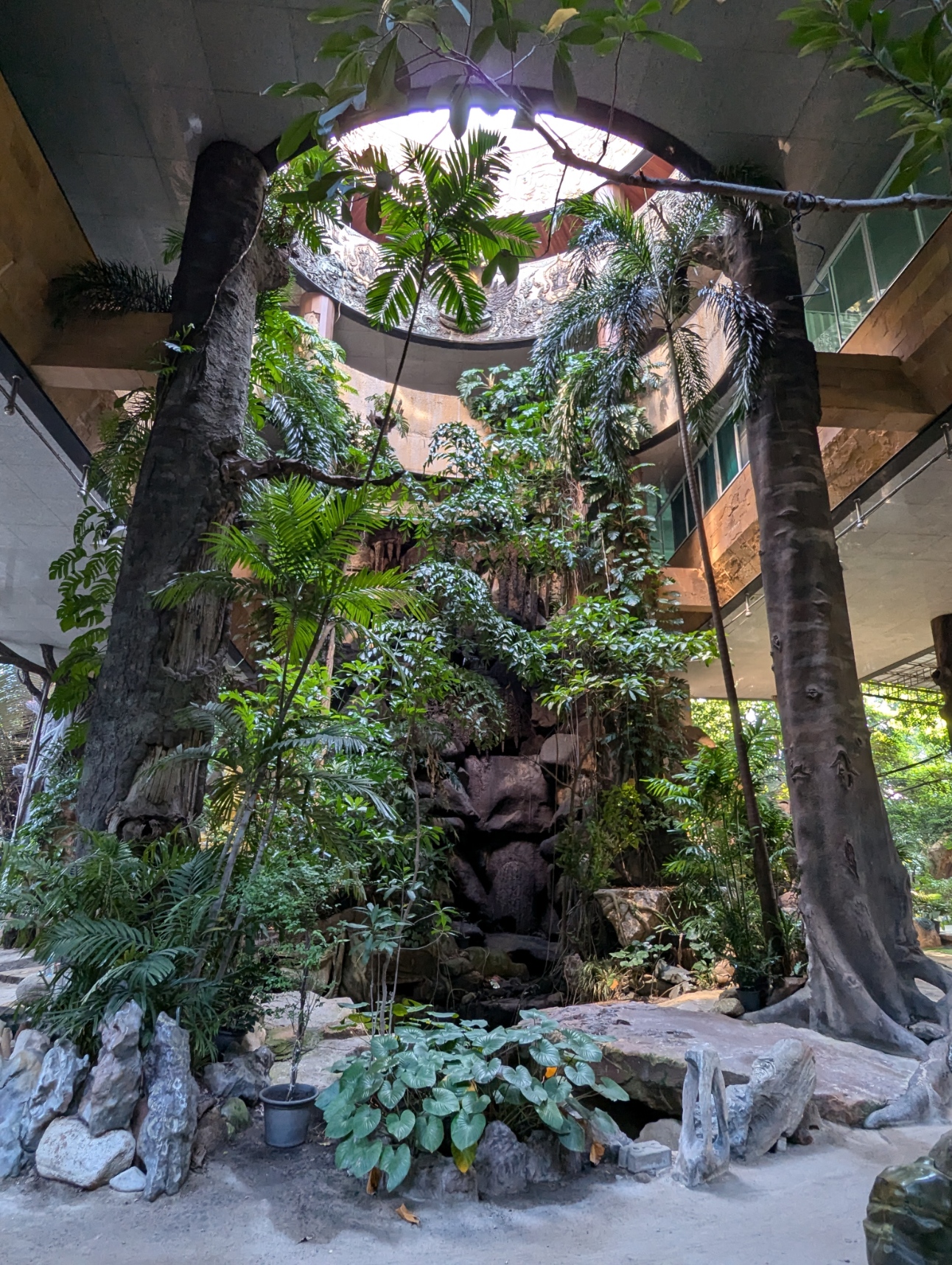
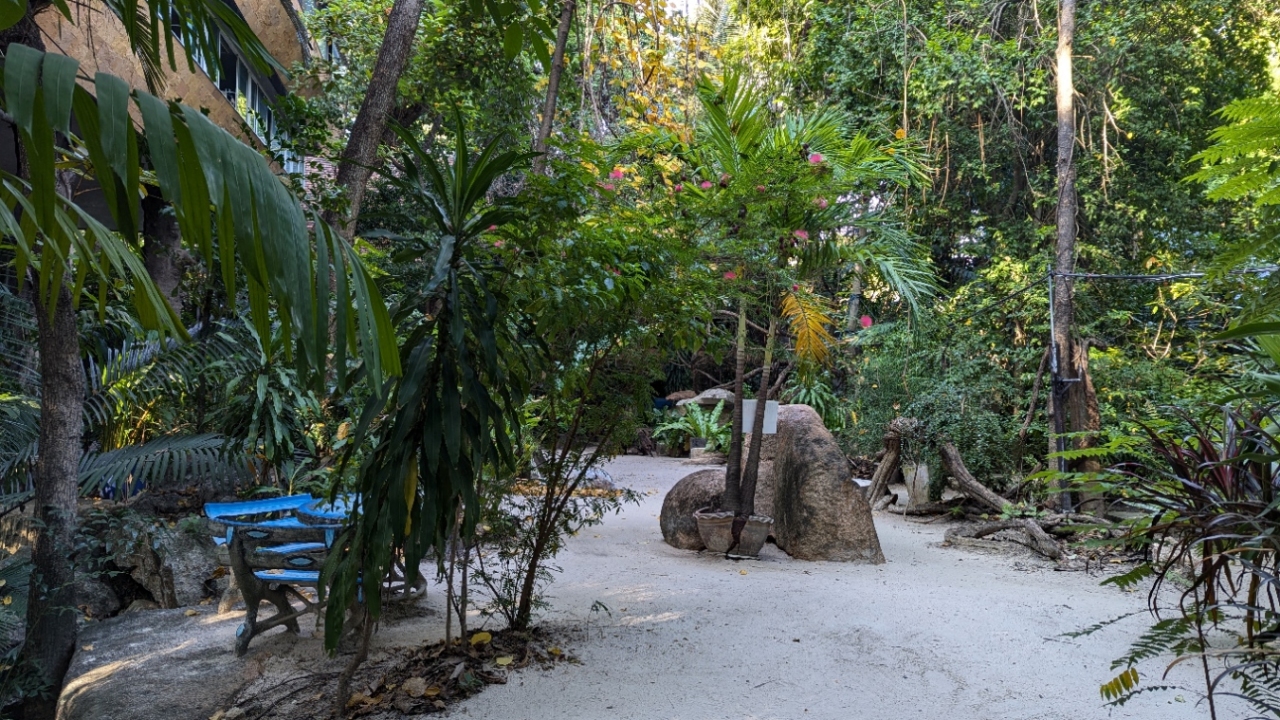
One persistent challenge that Santi Asoke has continuously tried to address has been the environmental crises. The movement has tried to show people alternative ways to live by promoting a simple and sufficient lifestyle. As members of the community point out, nowadays many people live extremely comfortable lifestyles and are oblivious to the suffering they are creating for themselves and others. When visiting Santi Asoke’s temple in Bangkok, it quickly becomes clear how important the connection to nature is for the community members. The temple grounds are nestled within a beautiful small forest that, upon entering, makes you immediately forget the mega-city surrounding it. The architecture of the temple facilities is extremely impressive. Trees did not simply get removed to build housing; they were incorporated into the design of the temple. In small ponds the temple saves and recycles water that is used in the kitchens, bathroom, and showers. The temple grounds include a pagoda, office buildings, restaurants, markets, workshop, living quarters and even a school.
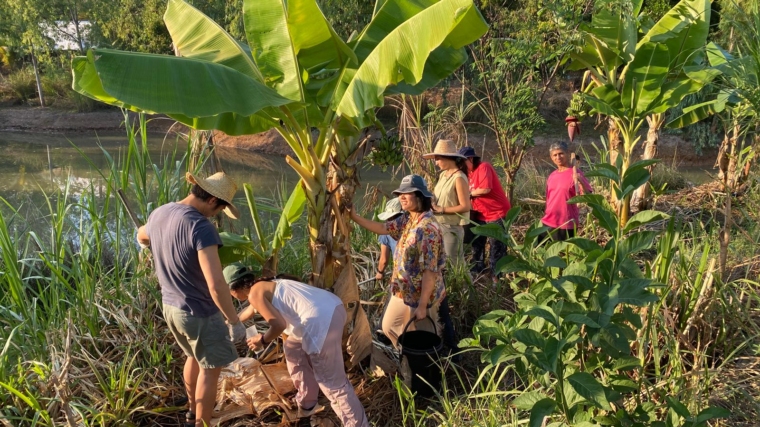
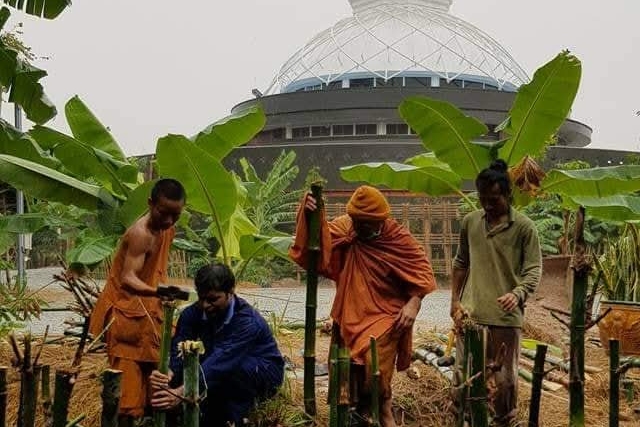
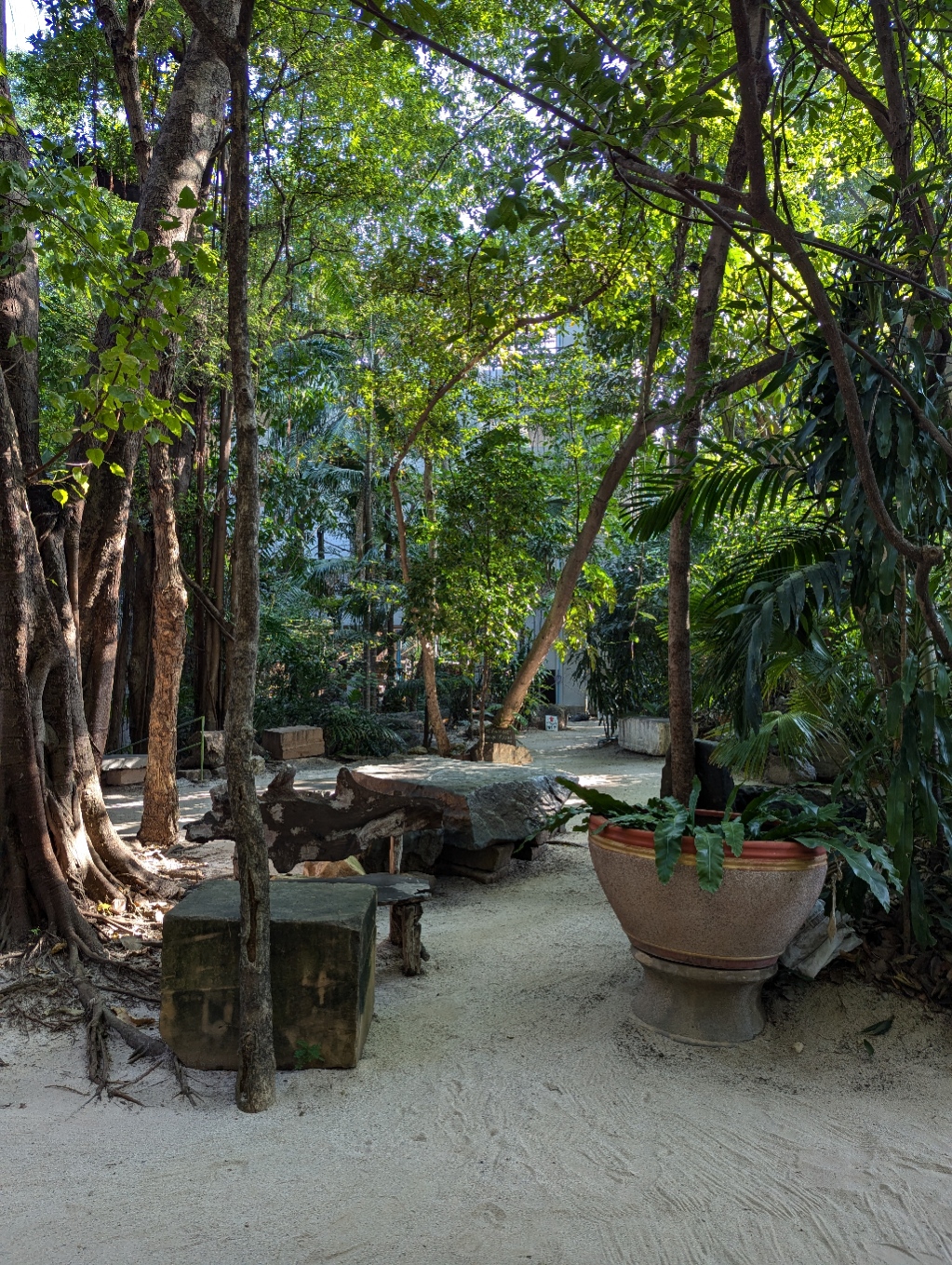 In the Santi Asoke community’s environmental work cannot be separated from its social engagements. Both are complementary. All services and projects are designed to create community and support people who are struggling, while remaining eco-friendly and sustainable. Food and other goods are produced organically and sold at cheap prices. The temple accepts donations of items such as clothing, furniture, and electronic devices for them to restore and resell. Through these sales the temple rases between 600,000 and 800,000 baht each month. Santi Asoke is an open space; everyone can visit the temple to learn about their philosophy, their way of practicing and the way in which they are engaged with the surrounding communities. Those who would like to contribute something on a more personal level can volunteer in ways that align with their skills and passions. If someone is interested in cooking and vegetarian cuisine, they can visit Santi Asoke and volunteer in the kitchen. The restaurants, the workshops, and the stores are open to people who want to engage in social and environmental work. For the people who join the community and are willing to do community work, housing is free. The community’s focus lies on self-sufficiency and the balance of human life and nature. These days Santi Asoke has many different environmental projects organized by monastics and lay people. Some projects include, promoting and practicing waste management, recycling plastic, producing organic fertilizers, producing microorganisms for wastewater treatment, and planting trees. These activities such as planting trees are often made into events where people come together and have a celebration, strengthening the connection within the community. Furthermore, Santi Asoke now offers alternative burials where instead of putting people’s ashes in a temple building, they put them in the earth and plant a tree over them that is then nourished by the physical remains of the buried body. By closely combining environmental and social work Santi Asoke pursues the goal of protecting the environment while ensuring the physical and mental wellbeing of the people in and around its temples.
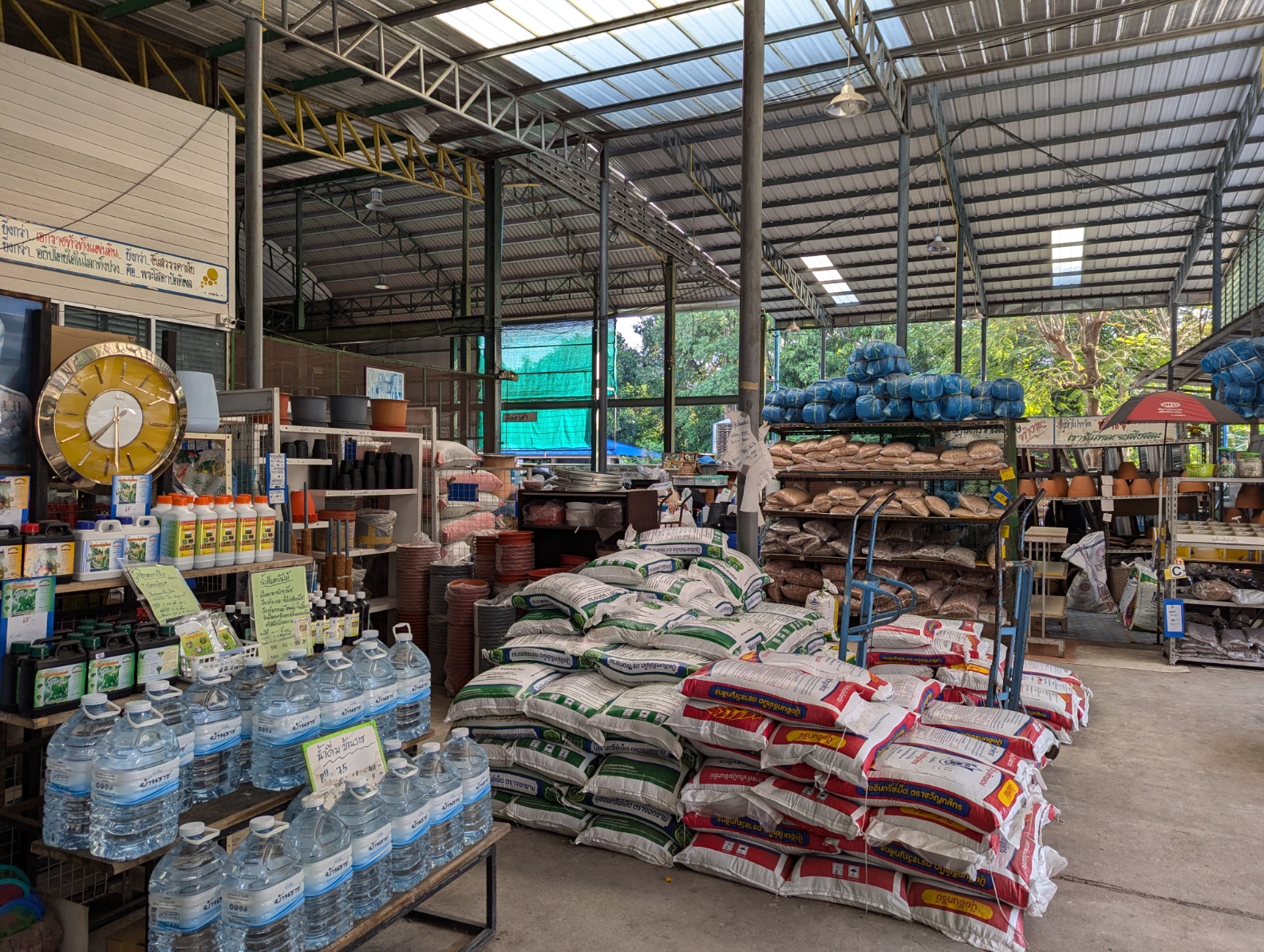
Santi Asoke showcases, that being an eco-temple does not mean exclusively addressing environmental issues. Being an eco-temple is an underlying commitment. It means that a temple is focused on protecting the environment and conducting its everyday activities in a sustainable and eco-friendly way. However, eco-friendly behavior also serves as the basis on which the temple then builds a strong social foundation. As Santi Asoke shows, an eco-temple can become a community center by addressing issues such as poverty and providing work and education. Being an eco-temple ideally means being an institution that is socially engaged and committed to fulfill this role in a way that does not harm the environment.
Santi Asoke is a very flexible community. When asking them about how they set up their different engagements and projects it becomes clear, that their philosophy is to not plan and pursue specific projects in a detailed manner far in advance. The temple members explain, that rather than creating concepts of projects that they think are necessary, the projects come to them. If they see a situation that needs to be addressed, they try to do whatever they can in that moment and from that the next steps develop automatically. “Reality tells us what kind of projects are needed right now”, therefore there are no big plans for the future. When asking the community where Santi Asoke will go from here, they answer, that they will simply continue their work, day by day. “The end point is death, and we are all heading there, so there is little point in worrying too much about the future. We simply try to do our best here and now.”