A Temple Turned Recycling Center
by Linus Dolfini
Bangkok, May 21, 2026
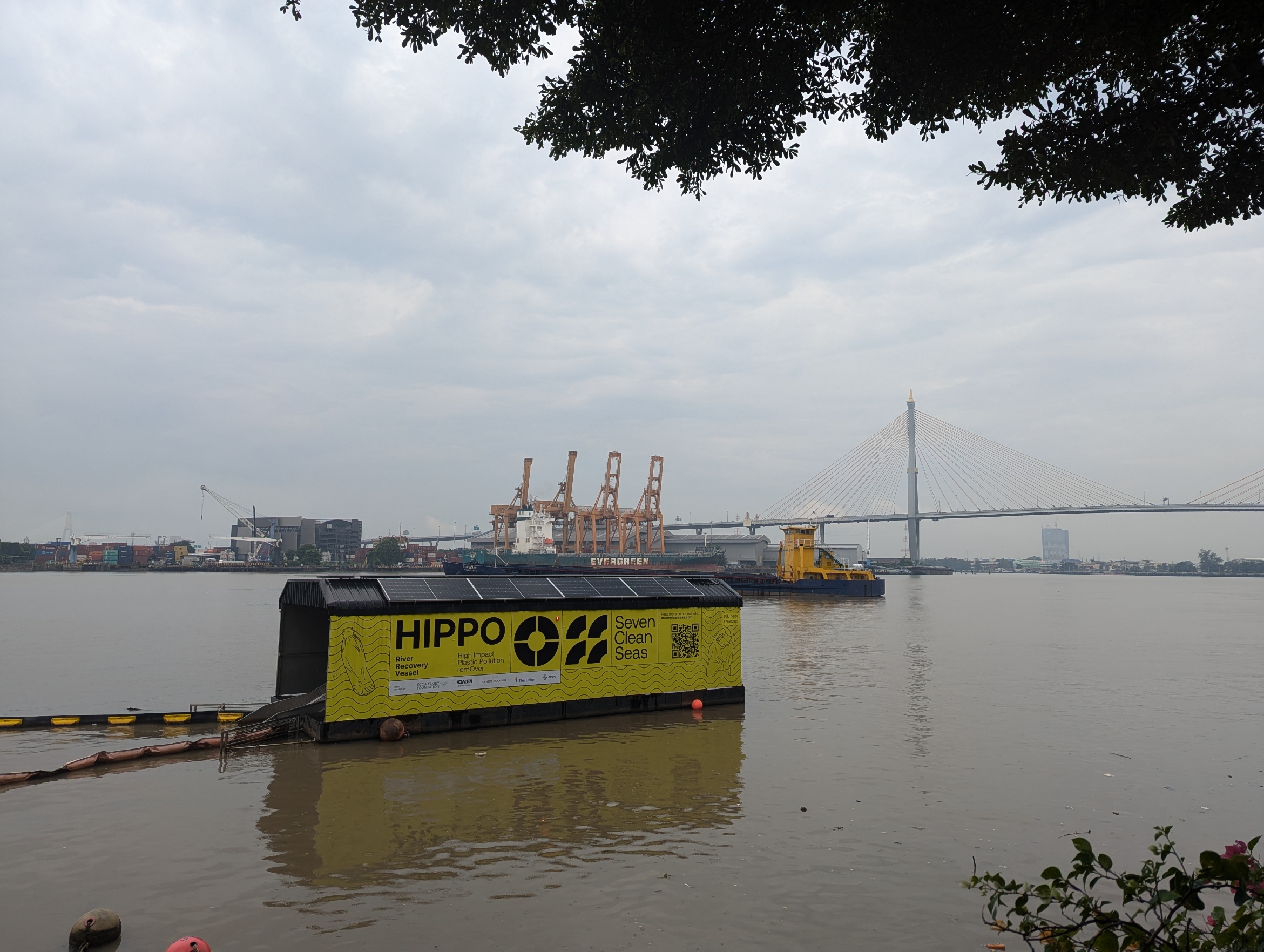
The temple of Wat Chak Daeng is located on Bang Krachao, the so-called green lung of Bangkok, an artificial river island in the South of the city. It’s situated directly on the riverbank near the famous Bhumibol Bridge. The temple was established over 250 years ago, back in 1757 as a center for students of Abhidhamma. Since the early 2000s, however, Wat Chak Daeng has turned from a traditional monastery into a place that takes on a proactive role in addressing environmental challenges, particularly waste management. Nowadays the temple is not only a spiritual hub but also a leader in sustainability efforts. Its most famous project has become the innovative approach of gathering and processing plastic bottles into monks’ robes. This initiative is part of the temple’s broader commitment to creating a cleaner, more sustainable environment for future generations.
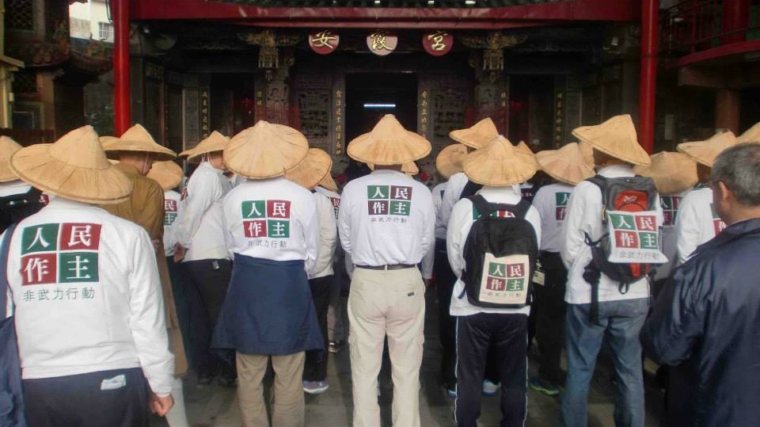
The temple’s abbot, Phra Maha Pranom, has been involved in waste management and fighting Bangkok’s waste pollution issues for two decades now. He recalls how on a trip to Taiwan, he was introduced to the advanced Taiwanese system, which manages to recycle large quantities of waste. This inspired him to advance recycling efforts in his monastery as well. It took him over ten years to establish the first successful recycling project, since sorting garbage and recycling was a foreign concept at the time for most people in Bangkok. The abbot also had to face criticism from monks of other monasteries who felt that waste management and environmental projects were not the responsibilities of Buddhist monks. Additionally, the temple faced financial issues, it did not have the means to sustain large scale recycling efforts. Phra Maha Pranom explains how in the beginning, he was doing everything by himself, with the help of a handful monks from the monastery. One of the monks at the time had been an environmental engineer before his ordination and was familiar with different recycling strategies, so together they developed a way to extract oil from melted plastic wraps so it could be reused. However, this method turned out to be too inefficient and they had to give it up. A turning point came when a visitor introduced the abbot to the concept of turning plastic waste into textiles. This idea inspired the abbot and thirteen years after his initial efforts he managed to establish a partnership with a large chemical company that is based in Bangkok. Together they were able to develop the necessary infrastructure and launch the project of turning recycled plastic bottles into monk’s robes.
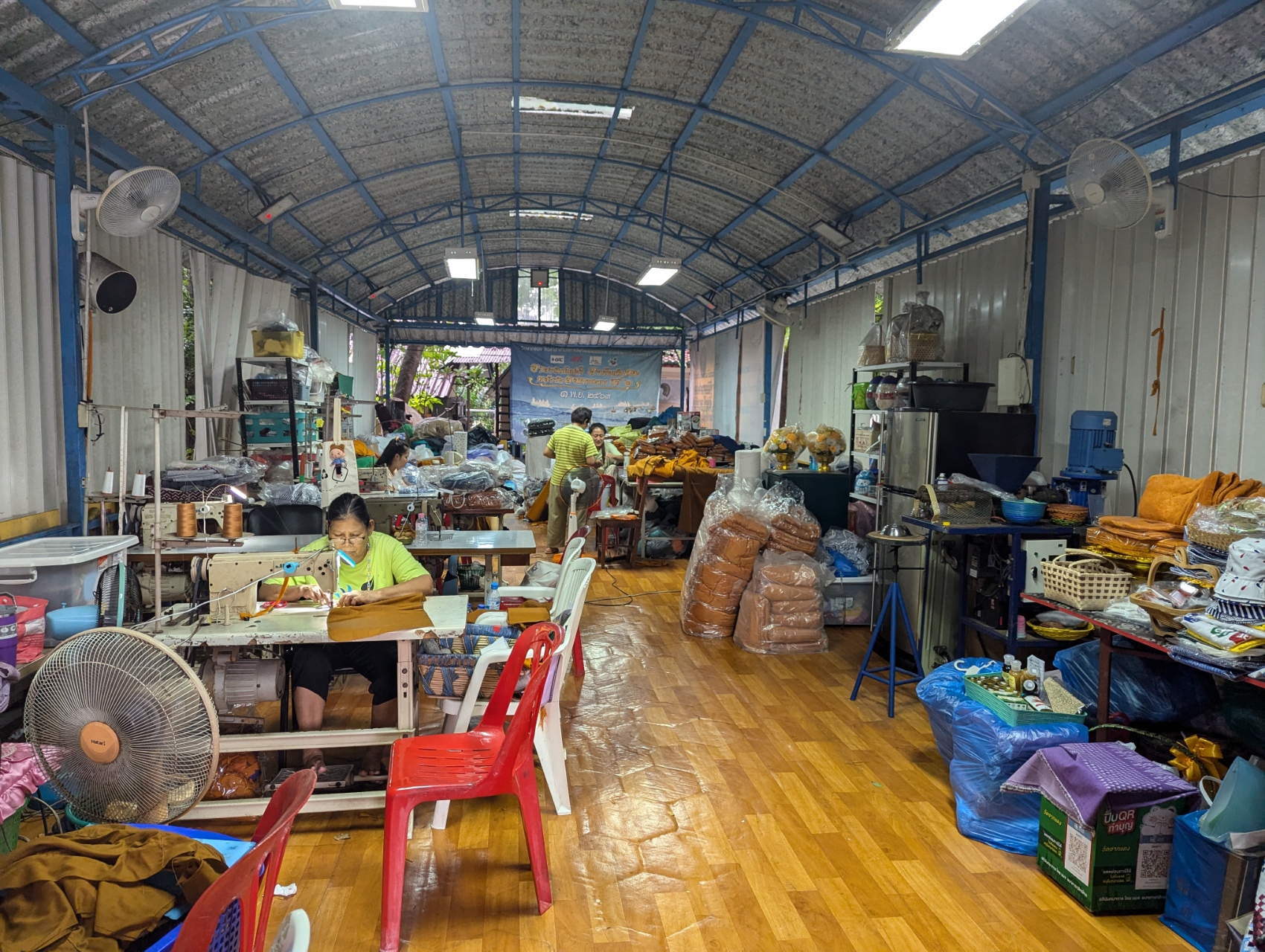
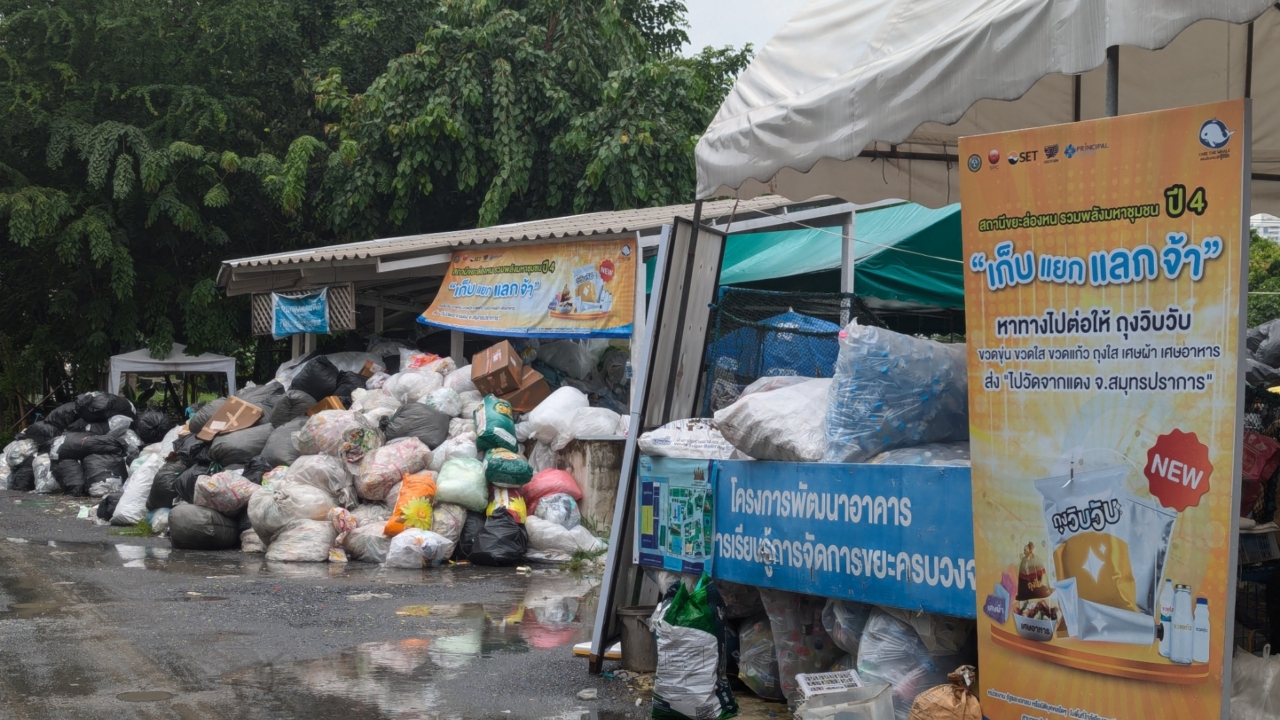
The recycling process as it works today starts with gathering the plastic bottles. On the grounds of the monastery there’s a spot where people can come to and drop off their used bottles. Recently the monastery has also started working with other organizations and companies, to receive even more used plastic bottles from them for their project. These bottles then get cleaned and sorted. This work is mostly done by people from the community who have a hard time finding other work – elderly people, Burmese immigrants, or disabled people. For them, the work at the temple which is compensated provides the chance to earn a small income. Once the bottles are prepared, they are sent to factories where they are shredded into small particles. These particles are used to produce eco-friendly fabric, which is then dyed and sent back to the temple, where the fabric is made into monk’s robes and newly also other items of clothing such as skirts, shirts, or hats. To make a complete set of a sarong, undergarment, and robe, 60 plastic bottles are required. Due to the higher costs of producing these sustainable textiles, the robes are double the price of regularly produced ones. There is a solid demand, yet 2024 was the first year since the Covid-19 pandemic where the temple managed to create a small profit from the sales of the robes and other clothing. According to the abbot the partnerships with large companies, he managed to establish are vital for the temple’s projects. Without support, Wat Chak Daeng could not sustain its efforts in the same manner as it is doing now.
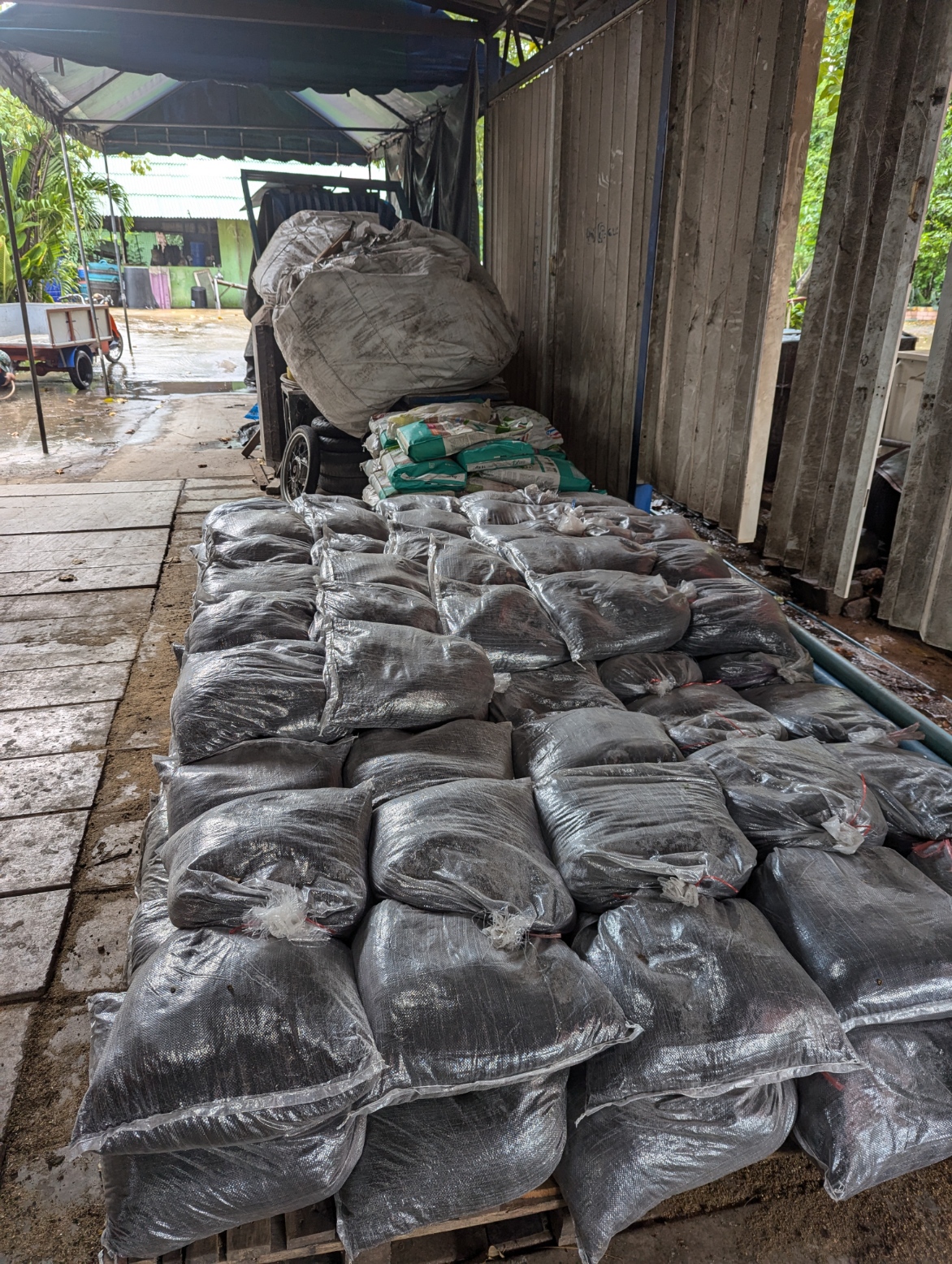 Recycling plastic bottles is only one of Wat Chak Daeng’s environmental initiatives. Parallel to the development of the robe-production, the temple also established a way to create organic fertilizer. For that matter, organic waste from the kitchen as well as all the leaves and other greenery the monks collect when cleaning the grounds are gathered and used to manufacture fertilizer. This process takes place on the temple grounds. The temple sells the product to farmers so they can replace the chemical fertilizers which are especially harmful to humans and amongst other negative effects lead to increased air and groundwater pollution. However, the temple faces the same issue here as with the robes, the fertilizer that they produce is more expensive than its chemical counterparts, so finding buyers is a challenge.
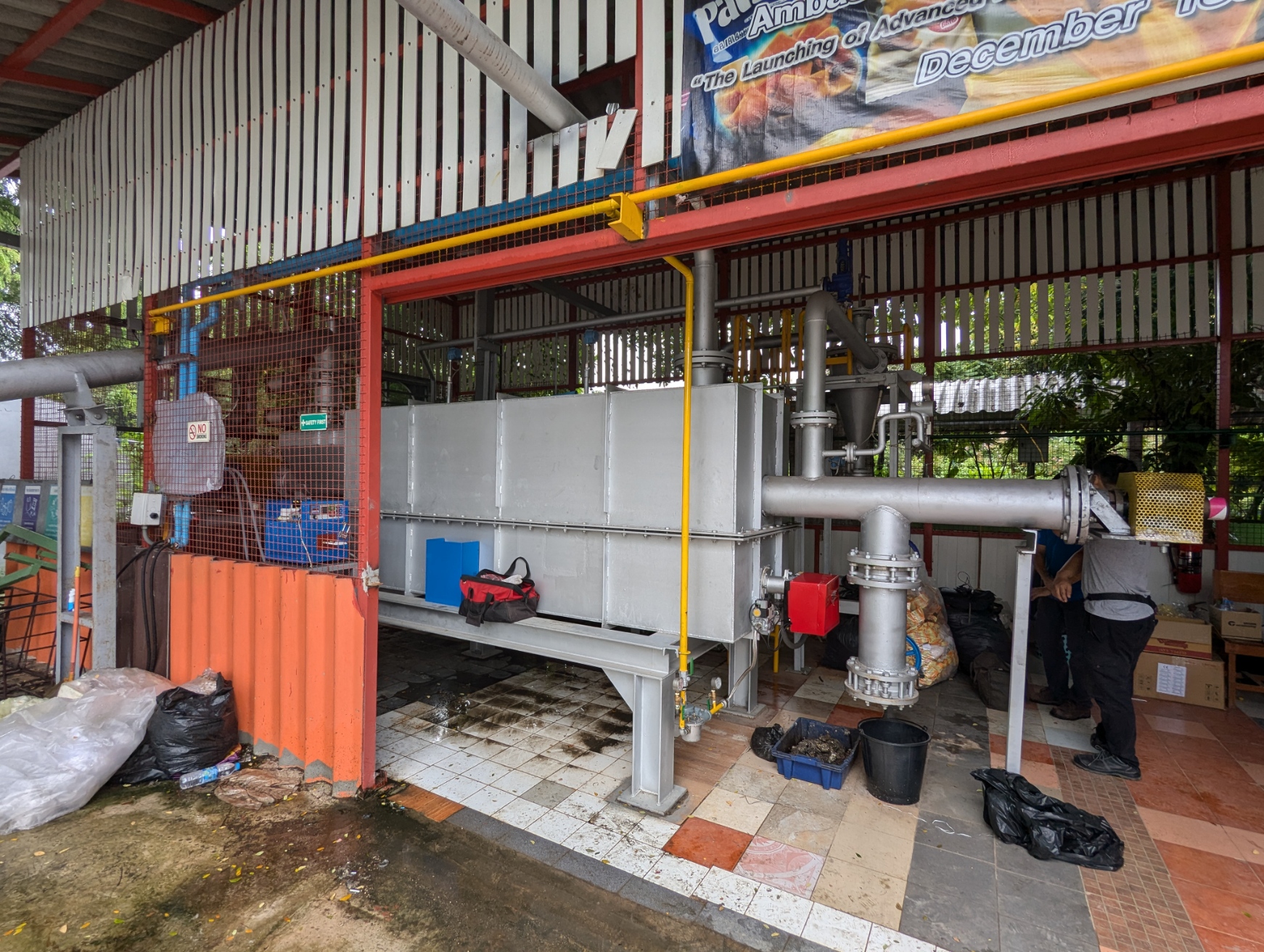
Furthermore, the temple gathers aluminum that people can dispose there just like the plastic bottles. Together with engineers from Chulalongkorn University they recently developed a machine with which plastic can be removed from aluminum products. The oil is then distracted from the plastic and the pure aluminum is compressed into small compact pieces. The oil is not of a high quality but one of the monks explained that it can for example be used for cremation for instance. The compressed pieces of the metal are sold to companies who use it for their own productions. One kilogram can be sold for 70 baht.
These comprehensive approaches reflect the monks’ believes that living according to Lord Buddha’s teachings also includes addressing local and global environmental crises. Buddha’s teaching that “there is a solution to every problem” underpins the temple’s philosophy, making inaction in the face of environmental degradation unthinkable. The idea of recycling materials is not a modern invention. It traces back to the time of Lord Buddha, who, along with his followers, reportedly made robes from discarded fabrics found in trash piles or shrouds. Even when a robe was too used to wear, it would be repurposed into a matrass or a floor mat. This ancient practice echoes modern principles of a circular economy, reminding us that if we shift our mindset and find value in old or discarded materials, we can significantly reduce waste.
Here however, a discrepancy exists between the current efforts of Wat Chak Daeng, and the ancient practices and ideas taught by Lord Buddha. Wat Chak Daeng has established ways to address the waste pollution in Bangkok, by managing the produced waste, and successfully recycling it into products, so it can be reused. Yet, these efforts only pose a holding action. They do not address the issue of the waste being produced in the first place. This would be a critical step to move forward towards a circular economy. Because the plastic waste that’s produced still causes issues, even if it can be managed and repurposed. The production of plastic widely depends on fossil raw materials such as oil and gas, which makes single use bottles, bags, and containers extremely unsustainable. Furthermore, the wide use of plastic products – including clothing that is made from recycled materials – leads to increased levels of microplastic in our environment. This poses a threat to humans and animals since the ingestion of microplastic goes hand in hand with inflammatory reactions and toxicological effects. These days microplastic can be found in various products, such as fish, milk, honey or drinking water. Combating waste pollution through large-scale recycling measures is a major step forward compared to the situation just 10 years ago and it has helped to improve the waste situation in Bangkok. Yet, it cannot be the final solution to the fundamental problem of mass consumption.
Wat Chak Daeng’s sustainability efforts however also have had other beneficial effects. They have led to social changes within and outside the temple. 20 years ago, when Prah Maha Pranom started advocating for more sustainability he stood by himself. The people from the community around the monastery as well as monks from other monasteries didn’t pay much attention to the issue of waste pollution and recycling was a new concept to them. However, over the years Wat Chak Daeng’s efforts started to influence the perceptions of the people outside the monastery. More and more individuals from the surrounding community started to dispose their sorted waste on the temple grounds. One of the main reasons in the beginning must have been, that at Wat Chak Daeng you don’t have to bring gifts such as food to make merit, but instead you can donate your plastic bottles. Recently the mindset of people has changed so much that some have started to collect waste themselves, because they learned about the possibility to earn an additional income by reselling aluminum, paper or plastic to certain companies that use it for their production.
Its recycling projects have made Wat Chak Daeng more widely known, which in turn has led to the temple being more involved with the community around it. There have been numerous newspapers visiting the temple to report on its ongoing projects. Other monasteries have started to show interest and have established regular contact to learn about what they’re doing at Wat Chak Daeng and to adopt certain strategies for their own temples. Furthermore, there are school visits to the temple, where students are taught about recycling and the importance of reducing waste as much as possible and all the ways in which used products can be repurposed. According to the abbot the temple is now affiliated with 100 monasteries and around 400 schools who are all interested in Wat Chak Daeng and learning about its recycling efforts. For the people from the surrounding communities, the temple has started doing recycling workshops, where once a month everyone who’s interested in helping and learning more can come to the temple to support them in their efforts.
Over the last 20 years and thanks to the efforts of its abbot Phra Maha Pranom, Wat Chak Daeng has evolved from a traditional Buddhist monastery into an environmental leader who displays how profoundly religious institutions can impact sustainability. Through its innovative recycling projects – turning plastic bottles into clothing, producing organic fertilizer, and making use of disposed aluminum – the temple has not only managed to find ways to address the immediate waste pollution issue in Bangkok but has also fostered social change. By engaging with the local community, awareness about environmental issues was raised and recycling was introduced to a wider audience and became more mainstream. Following the example of Wat Chak Daeng, people have learned how to help address the problem of waste pollution on an individual level with a few simple steps. Separate your waste and find out where you can dispose of it properly. Try to reuse products and give them a new purpose instead of throwing them away. And above all, try to reduce your consumption of disposable products and use reusable shopping bags, bottles, food containers, etc. instead. By trying to find and promote solutions Wat Chak Daeng managed to connect to hundreds of monasteries and schools all over Thailand, which are now learning about its practices and trying to adopt them. Partnerships with large companies have made it possible for the temple to significantly increase its capacity to gather and manage wasted materials. And there is no end in sight, as Wat Chak Daeng will continue to work on expanding its efforts and address the waste pollution and sustainability issues in and around Bangkok. It is a reminder of the potential of originally small-scale approaches by spiritual and religious leaders, and how significant they can become for the communities around them.