Eco-Village: From Grassroots Initiative to Global Movement
by Linus Dolfini & Guy Boonyarakyotin
Bangkok, May 3, 2026
This article is based on an interview with Ph.D. Petra Čarman conducted on March 24, 2026. Petra has been involved with the Eco-Village Network for many years and is also a close friend of INEB and the Eco-Temple Network.
The Eco-Village Network is a movement that has been developing for over 60 years, evolving from a few small, local initiatives into an intentional international community. This article provides an overview of how this evolution took place and how local efforts gradually organized themselves into a global movement; while the regional branches of the network followed different pathways, they have collectively upheld a common structure while remaining flexible. In addition, the article compares the approaches of the European and Asian networks and focuses on the internal and external challenges that come with developing an Eco-Village.
Petra explains that the first villages in the West were established over 60 years ago in the 1950s and 60s. Back then, in Europe this movement was mainly led by ‘hippie’ communities that were at the forefront of this movement, incensed by worrying trends in environmental degradation and stressing the importance of environmentalism and the need to change our ways of life in order to move away from consumerism and capitalism. The original Eco-Villages promoted the idea that contemporary communities can build more authentic connections between people and their environment. Central to this philosophy is the importance of establishing a spiritual harmony between Humans and Nature.
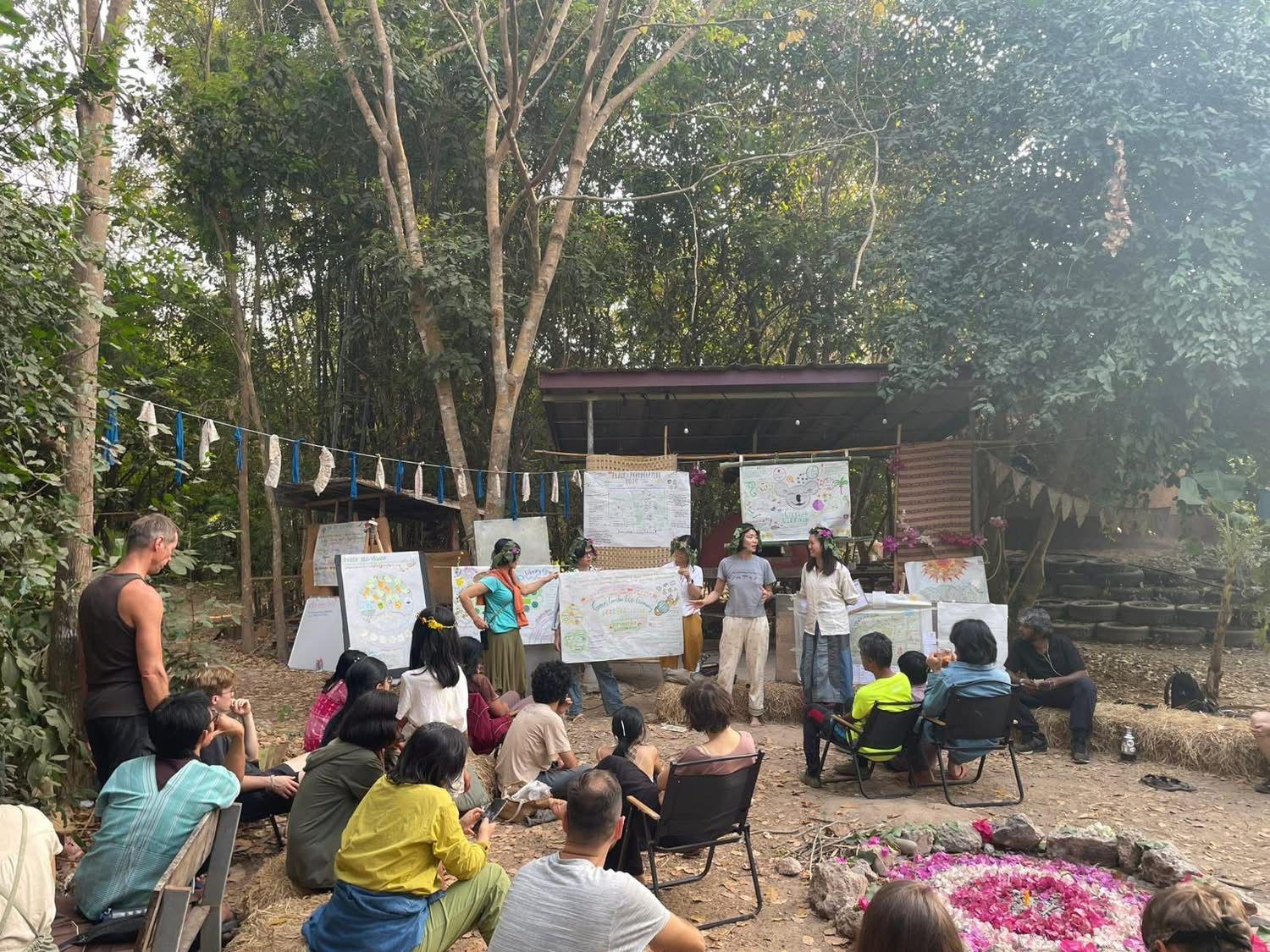
Over the following decades, additional villages were established while the existing ones kept evolving. In the 1990s, there was an initiative to bring these communities together and create a more unified movement, with the intention of establishing channels to share the knowledge gained through years of sustainable living. Bringing together the different Eco-Villages from various locations around the world was about working on more proactive ways to diversify the foundations of Eco-Village Design. The goal was to gather different ideas and experiences into a comprehensive framework that would paint a holistic picture of how to build such communities, implement environmental projects and adjust individual lifestyles.
One of the drivers behind this development was Findhorn, a Scottish Eco-Village and one of the oldest of its kind. Together with the Gaia Education Foundation, which emerged from Findhorn, they began to explore how to promote these concepts in a more organized way through specific programs that would allow people to join different Eco-Village communities and experience what it truly means to live a more sustainable, community-oriented lifestyle. Over the years Gaia Education Foundation became a leading provider of holistic education in sustainability, regenerative practices, and community development and nowadays they offer institutionalized training programs for people from all over the world. Petra explains that the foundation now represents the more institutional and educational aspects of the original movement, while the Eco-Village Network is active on the ground through its various local initiatives.
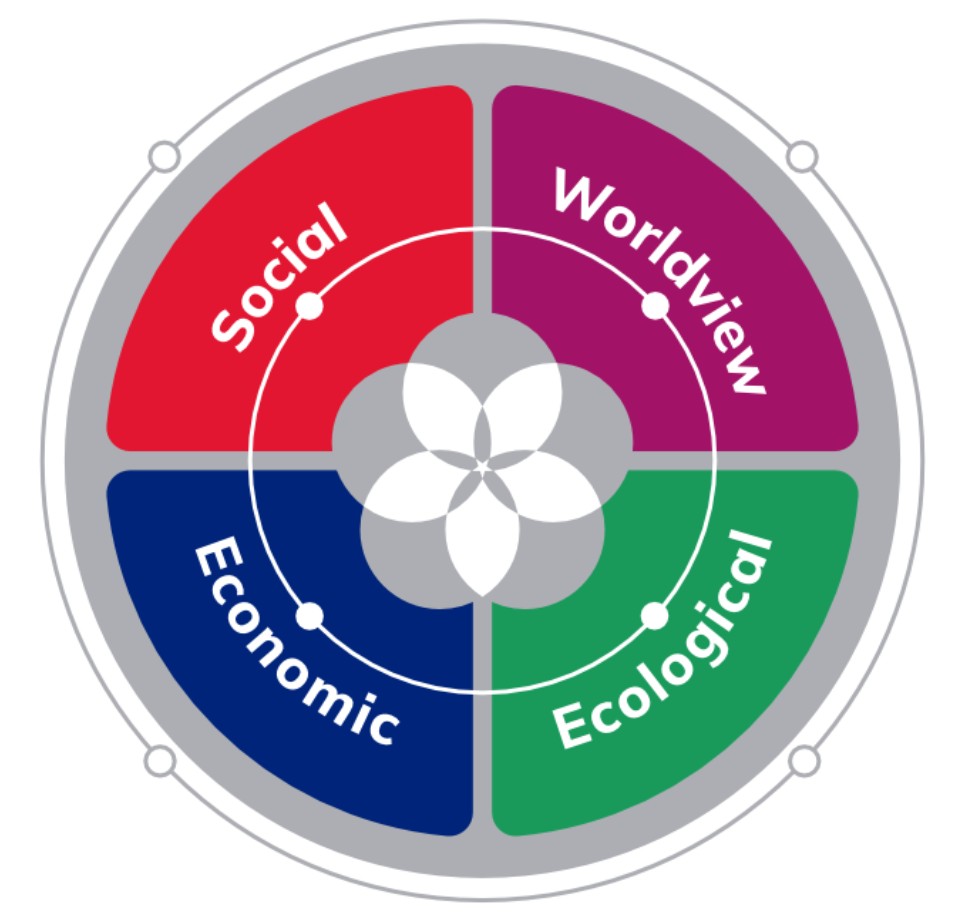 The program that was developed by Gaia Education Foundation back when it was first established, is called Eco-Village Design Education (EDE) and it is still conducted today. The program is a fully experiential, fully residential experience where people come together to tackle the four dimensions of sustainability that the EDE-framework defines and that are integral parts of an Eco-Village community: Social, Worldview, Economic and Environmental.
The social dimension focuses on organizing the community, and clarifying how people live together, work together, make decisions in a participatory manner, and how to resolve conflict. It is also about integrating diversity in such a way that it becomes an asset, rather than allowing it to become an obstacle to harmonious coexistence. The worldview dimension entails the spiritual and cultural aspects of sustainability. Its goal is to help the participants shift their views away from the destructive cultures and structures people often grow up in towards a paradigm shift that allows them to actually see the world as a living being rather than something we can take advantage of. The economic dimension links the social aspects of communal living, shared decision-making, and way of life with important practical matters, such as how the community can earn money and how the collective can best survive in a world where many alternative communities are not able to be self-sufficient. At the same time this dimension also takes a look at different perspectives on what it means to be wealthy in a way that goes beyond finances but instead focuses on all the various resources available to the community to create social entrepreneurship. Finally, the ecologic dimension focuses on how people can work together in order to become part of the natural environment. This dimension is very practically oriented and entails lessons such as how communities can build their own houses, how energy self-sufficiency works, and how resources are best allocated to create a life that aligns with the nature around them.
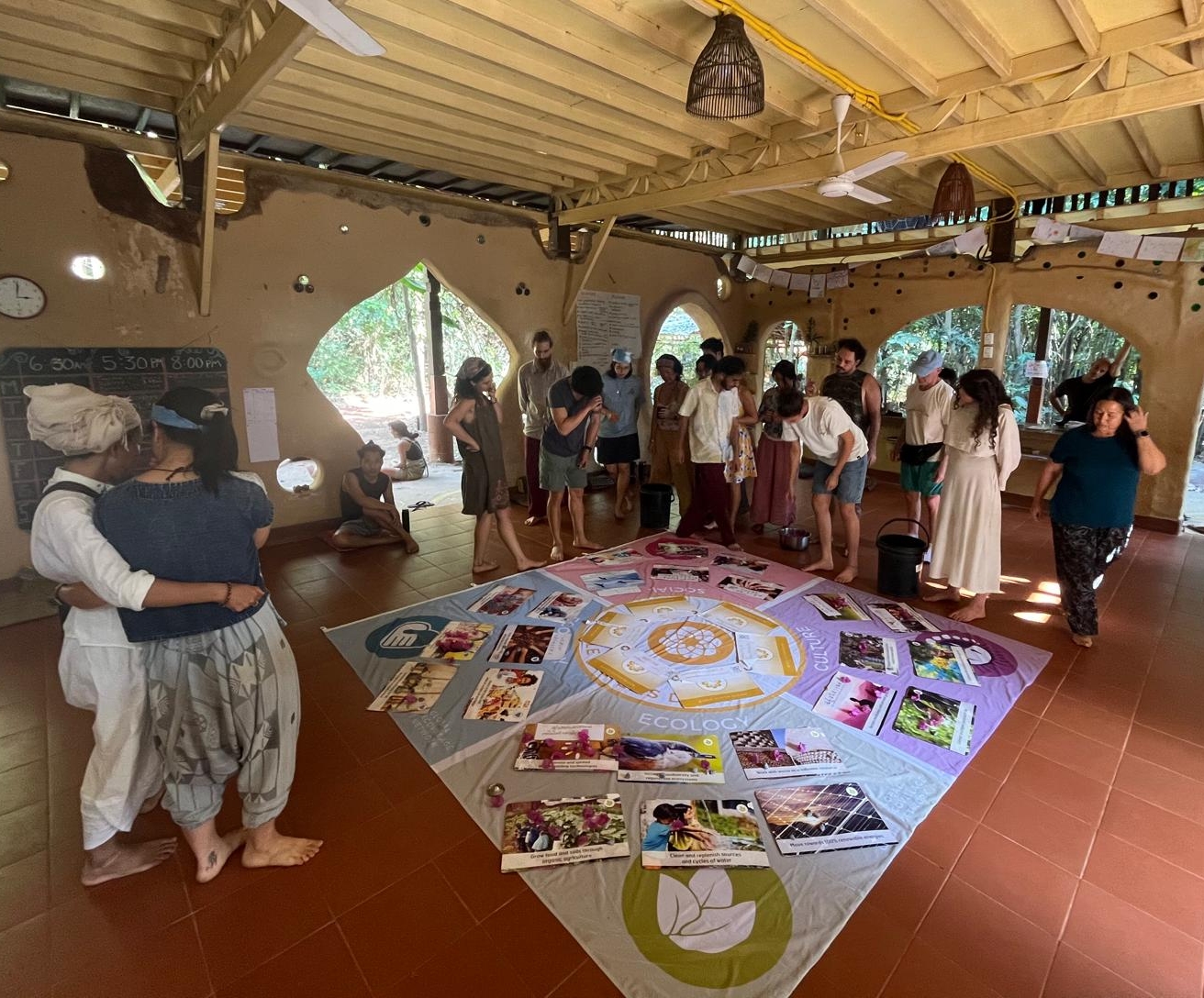
A key aspect of the EDE is that none of these dimensions is considered separately from the others. The EDE takes into account the fact that all these dimensions and topics are interconnected and together form a holistic concept. Furthermore, these four dimensions are flexible and can be adapted to the specific context in which they are implemented. After all, an Eco-Village in Southeast Asia must focus on different circumstances than an Eco-Village in Europe. The four dimensions are always brought together in a way that aligns with the context in which the respective community operates. Through that approach very unique engagements are created. At the same time however, it can be hard to narrow down what exactly makes an Eco-Village and what it is supposed to look like because of the various shapes that different engagements take all over the world. The key to the EDE is that it is not focused on teaching solutions, it helps people and their communities to think about topics, approach issues in productive ways, and find out what works in the contexts they are operating in.
These days the Eco-Village Network and the Gaia Education Foundation which came out of the same movement can be seen as “sister organizations” according to Petra. While Gaia Education is focusing on the institutionalized educational aspects, the Eco-Village Network and its members are engaged in their communities on the ground and are actively working on implementing projects and creating new Eco-Village initiatives. The network operates on a global level and is divided into five sections: Asia-Oceania, Europe, South America, North America, and Africa. Each of these sections is organized in their own way according to the local context.
The European part of the network, for example, is very institutionalized and based on a membership system. This is due to the stricter European legal system which provides clear guidelines for communities who want to build spaces for alternative living. Therefore, it is important for the network in Europe to follow these rules and regulations in order to find a way in which they can operate that aligns with the local culture. Due to these circumstances the European network is also more focused on the economic, and the social and legal aspects of building Eco-Village communities. In Asia, the network operates very differently and is a lot less institutionalized than its European counterpart. A lot of the work is done by volunteers that are doing their best to organize the sharing of knowledge and making the most of the limited resources available. Based on the differences between the two cultures two different approaches have been established that come with different characteristics. In Petra’s experience, the Asian network is stronger when it comes to finding creative and quick solutions and is more open to newcomers since it lacks clear membership procedures. People who are interested in being involved can simply reach out and become part of an initiative or start their own engagement based on what inspires them. The network will provide them with resources and assessments to help the new members track their progress and evaluate how well they are integrating the four dimensions. The European network, on the other hand, benefits from being an institutionalized and recognized organization with clear procedures since it allows the network to access funding from the European Union and therefore being better equipped financially.
The fact that the Eco-Village Network operates internationally and is connected globally can be challenging, as there are bound to be different worldviews and perspectives among network members, organizers, and participants. Incorporating diverse viewpoints in a balanced and proactive way is a challenge that can be observed amongst many movements and activist circles. Petra points out that this aspect is often overlooked, as it is automatically assumed that people who come together within such a network share the same worldviews. The EDE tries to specifically address this during its activities by focusing on the network’s and the Eco-Villages’ shared goals. Even though the individual members who come together as part of an Eco-Village or an EDE program for example share the goals they want to achieve, their underlying worldviews may still differ. Rather than trying to get everyone to share the same perspective, the Eco-Village Network’s approach is to always acknowledge that people may not share the same views and that there are small differences among community members and that this does not have to be an obstacle to their commitment. This is an important part of the Eco-Village approach because it recognizes that conflicts may arise based on varying views. Hence, the most important thing is to ensure that differences are openly talked about and to agree on embracing the diversity and focusing on what connects each member rather than trying to create uniform communities since that would be extremely counterproductive.
A crucial part of this process amongst the members of a community is to define what the non-negotiables are and what values the community should be built upon. What do decision making processes look like based on the agreed upon framework and are there any specific cultural aspects that should be included in the community’s lifestyle? Being aware of these questions and addressing them from the beginning is so important because the success of each Eco-Village engagement depends on how its community is structured. Some initiatives are implemented in specific local contexts and include only people of the same culture while others invite members from all over the world. Flexibility is required to be able to find suitable ways to work with each other even if individual worldviews vary.
Besides dealing with the challenges of internal differences, newly formed communities must also often deal with tensions between them and the communities which surround them. Building an Eco-Village means establishing an alternative way of living and fully committing to it. Surrounding communities are often skeptical and initially wonder who these people are and what they are doing. Being aware of these tensions and addressing them is another key to creating a successful engagement. Again, there are differences that can be observed amongst the Eco-Villages in different regions. Petra explains that Eco-Village communities in Asia stand out less from their surroundings and therefore face less difficulty integrating into their neighborhoods. This is because amongst the Asian network there is a focus on reviving traditional communities. In Southeast Asia many people are still much more familiar with the local traditional ways of life, ways which the Eco-Village Network has actively been promoting since they are often more sustainable and holistic than modern lifestyles that are connected to capitalism and consumerism. This approach is less focused on building something completely new but instead wants to build on what is already there and what has not been lost yet. In Europe the situation is different since people have long moved away from these types of communities. For the Eco-Villages there it is more about developing an alternative way of community living from the ground up. By doing so they create a wider gap between themselves and the mainstream and therefore it is often harder for them to connect to the people from the surrounding areas.
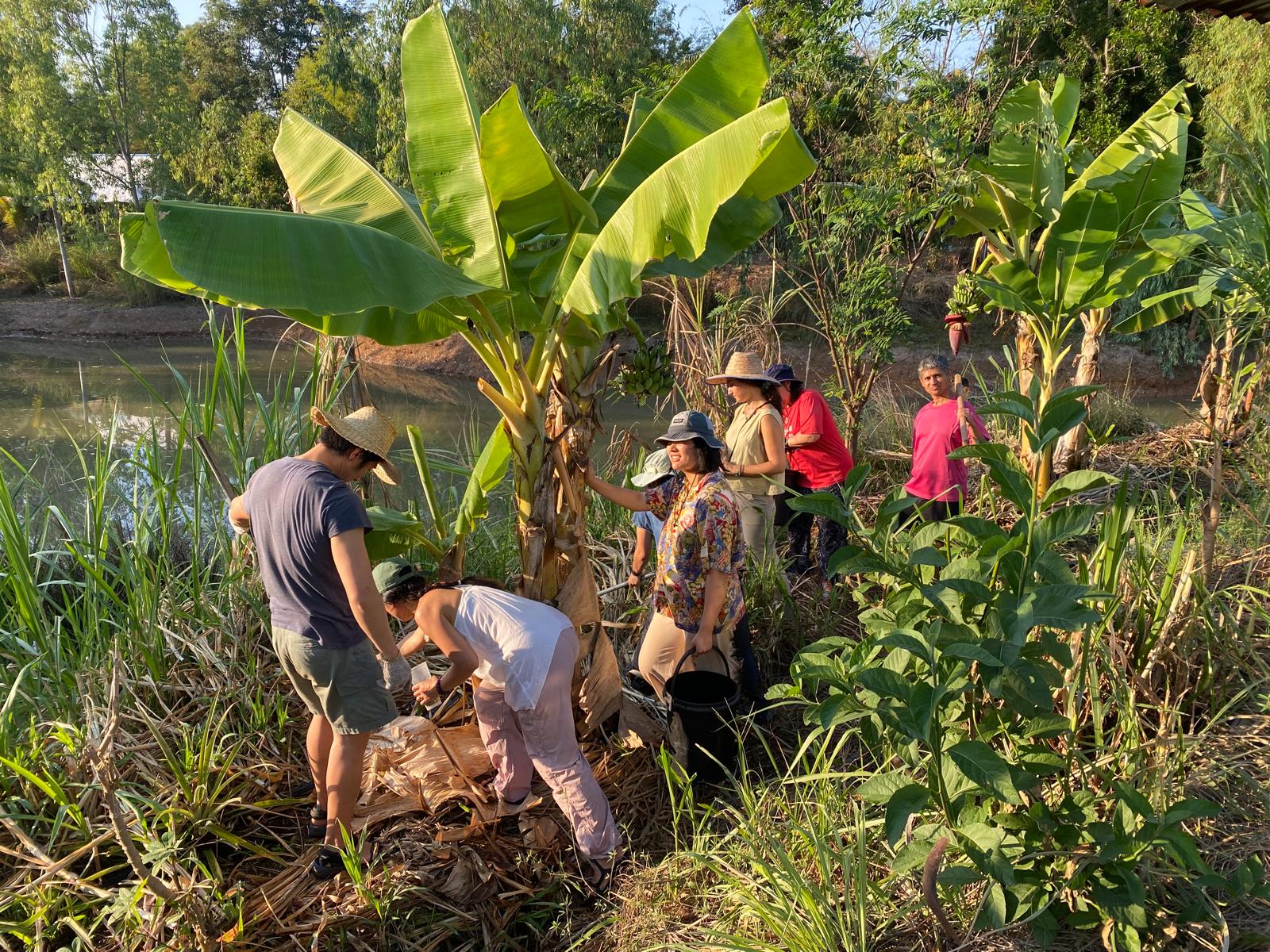
From its early beginnings the Eco-Village Network has developed into a global movement that enables its members to adjust to local contexts as alternative systems are created alongside the people they are meant to serve. While its flexibility does not come without its challenges ultimately it leads to a variety of Eco-Villages and training programs that are able to adapt to the needs of the people who are creating them as well as those who are joining later on by allowing diverse ideas to flourish simultaneously. These Eco-Villages that embrace the key elements of the EDE framework provide interesting alternative ways to community organizing and governance that do not institutionalize power or leadership. Overall, this movement has allowed numerous initiatives to thrive and explore new approaches to environmental work that unravel the binary between humans and the nature that surrounds them.