Engaged Buddhism and Sustainability in Rural Japan
by Linus Dolfini
Bangkok, November 10, 2025
Amrita Zen Life: 688-3 Nishino, Kimino-cho, Kaikusa-gun, Wakayama Prefecture
As I meet with Chisa Yamashita over Zoom, she is sitting in her family temple in the Kinokawa city, a rural area of Wakayama Prefecture south of Osaka. Chisa is the founder of Amrita, a small business consisting of a tea shop as well as a store that is located in the district next to the one, she grew up in. Based on the concept of “Good Things and Good Deeds in Daily Life” Amrita focuses on selling organic and sustainable products that support the lives of both producers and customers. The store offers an all-encompassing range of eco-friendly products such as clothes, accessories, kitchenware, sanitary products, or groceries. The products mostly come from Southeast Asian countries such as Sri Lanka, India, Thailand, Laos, and Vietnam and by purchasing them, people support small sustainable initiatives rooted in local communities. The items that are sold at Amrita are personally selected by Chisa, based on which products make people feel good and enrich their daily lives. The physical store opened in 2020, and in 2021 she launched an online shop named Amrita Zen Life as well.
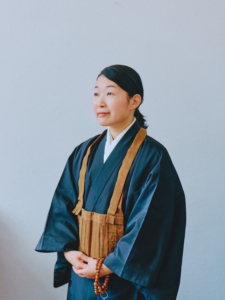
Chisa comes from a Buddhist background. She grew up in her family’s temple, where her father served as a priest. These “family temples”, as she explains, are quite unique to Japan since Japanese Buddhist priests are not expected to lead a celibate life, unlike in other Buddhist traditions. When she was 29 years old, Chisa ordained as a Japanese Buddhist priest herself. Her ordained name is venerable Kacho. According to Japanese Buddhist tradition she would be eligible to take over her father’s temple. However, her younger brother also ordained and while she is focusing on further establishing her business, he is expected to take over the temple in the future.
In Japan, more so than in other Buddhist countries, there is a disconnect between the monastic community and laypeople. Most Japanese do not actively practice Buddhism besides participating in rituals during important occasions such as funerals. At the same time Buddhist temples are not very engaged with people outside their own communities and are generally not very involved in addressing social issues. Chisa explains that while studying at Tokyo Metropolitan University, she noticed how many of her friends from non-monastic and non-religious backgrounds were struggling with similar issues – such as stress, isolation, and mental health issues – while also being disconnected from spirituality.
At the same time, Japanese Buddhist temples who “want to do good” often solely focus on conducting immediate responses to the problems they observe. They meet for example for a day at the beach to pick up plastic waste and garbage or they distribute bento boxes to homeless people. These are their ways to address issues such as pollution or homelessness. Chisa mentions that back when she was a graduate student, she joined many activities organized by Buddhist communities that were aimed at supporting homeless people. It was part of her studies. While there is nothing wrong with directly addressing these issues and trying to ease the immediate suffering, such actions do not tackle the underlying structural problems. They do not solve the root causes of homelessness or pollution.
In 2011 Chisa first encountered the International Network of Engaged Buddhists (INEB), during a conference at Bodh Gaya in India. There, she discovered socially engaged Buddhism for the first time. She describes how at first, she was surprised to see so many laypeople being actively engaged in a Buddhist network. In Japan meetings of Buddhist networks or organizations are usually only attended by members of the monastic community. Even in 2025 Buddhist temples that are interested in social engagement do not work together with laypeople. At the INEB conference in 2011 however, she saw people from all kinds of backgrounds – Buddhist or not – attend and join forces on social initiatives. INEB’s active engagement and the networks openness motivated her to learn more and establish further connections.
The disconnect within the Japanese society led Chisa to think about ways to create some sort of connection point between the monastic community and laypeople, to reintroduce everyday Buddhism and spirituality into her community. In 2016 Chisa moved to Sri Lanka for two years to work with the Sevalanka Organic Seeds Company whilst staying at a Sri Lankan Buddhist temple. During her time there she met Amanda Kiessel who is also an INEB member and one of the minds behind the Good Market initiative. Good Market is a curated community of social enterprises, cooperatives, responsible businesses, civic organizations, networks, and changemakers. It started out in Sri Lanka and has now members who are active in 122 countries. Almost 5’000 different Good Market approved enterprises are working in various fields such as farming, food, fashion and more. While living in Sri Lanka and working with Amanda, Chisa learned how to create a business strategy and how to implement a thought-out concept in real life.
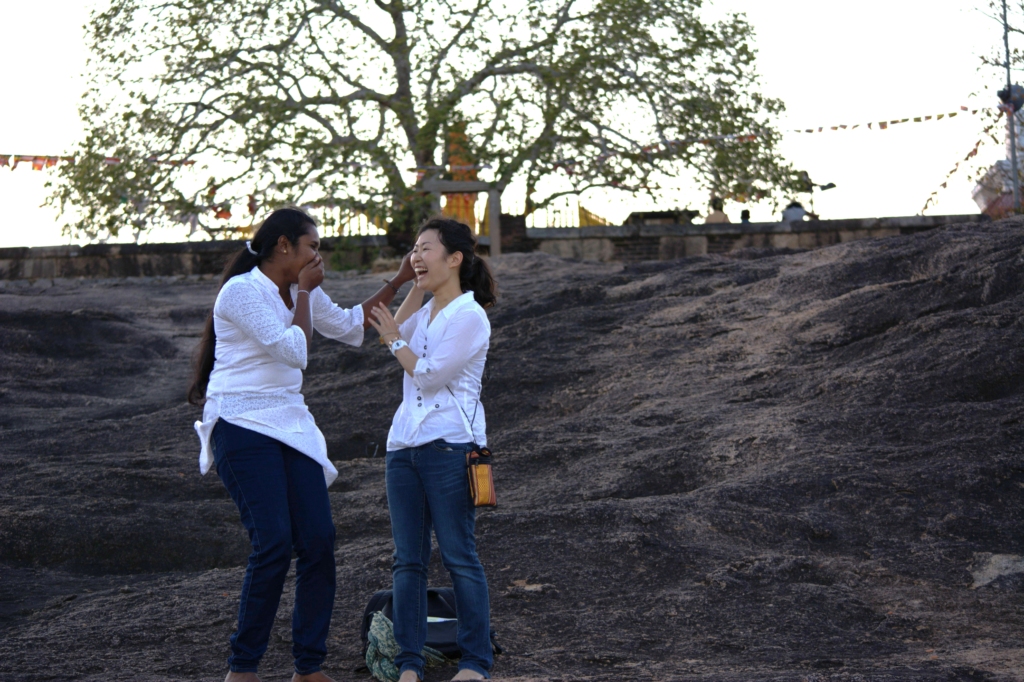
Another source of inspiration during her time in Sri Lanka was seeing how Buddhism there was integrated into people’s daily lives. She describes how Sri Lankans would get up in the morning, have some tea, pick up flowers and make small offerings to the temple before starting their daily business. These small daily practices, as Chisa states, have largely disappeared in Japan, hence even for her as the daughter of a Buddhist priest it was a new discovery to witness those traditional lifestyles. Experiencing the way Buddhism was practiced and lived in Sri Lanka and meeting Amanda who was helping to coordinate a global effort to promote sustainability inspired Chisa to eventually establish her own business back in Japan.
In 2019 she founded Amrita and opened her little tea shop as well as the organic shop next year. By opening her business, she intended to create a connection point between “the temple society and our modern society”. In the beginning her customers did not know she was an ordained priest. After learning about the idea behind Amrita, customers were often wondering how sustainability, Buddhism, and community engagement were connected. Chisa explained to them what the concept of sustainability means and how it relates to Buddhism. People often showed great interest and were eager to learn more about the philosophy behind her efforts. In this way, Amrita has been helping people to gain new perspectives. This approach also distinguishes the business from other sustainable shops, which promote sustainability, but do little to engage people or build community. Chisa, however, is committed to reintroducing people to alternative ways of addressing social and individual issues.
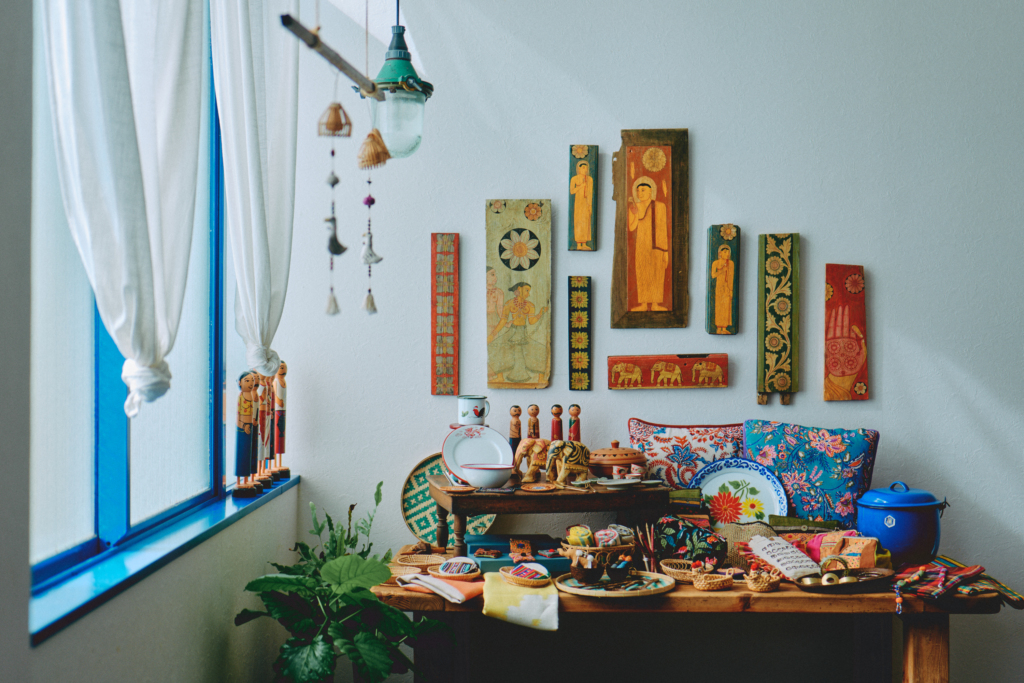
For her it is important to state, that her tea shop is not a place where she tries to spread any particular religious values. The shop is open to everyone who wants to buy something or sit down and enjoy a cup of tea. However, if they are interested in learning more about Buddhism, sustainability, or the ideas behind Amrita, then Chisa is happy to engage in a conversation and tell them about her ideas and the stories behind the tea shop or the products sold at the store. Unlike other Buddhist priests, she tries not to talk about Buddhism like a scholar. At temples, priests often use difficult language, complicated theories, and big words when speaking of Buddhism. For Chisa, this misses the point. She states that it is more important to bring Buddhism closer to the people and show them how it can be part of their daily lives again. At Buddhist temples visitors will often receive a lecture first. Afterwards tea is served. At Amrita it works the other way around. Chisa explains that people need to enjoy tea first, with a free mind. Then they may be engaged in a conversation. This way Buddhism feels more intimate again and not like a foreign concept.
When it comes to finding ingredients and products, Chisa relies mostly on the Good Market platform. There she finds organic producers who sell her spices, handcraft and more. Any fresh products she needs, such as herbs, she cultivates herself back at her family temple, where she has a small garden. Every morning before opening the tea shop, she takes care of her harvest and brings the fresh products to the shop which is located around 15km away in a more rural area. The temple and the tea shop are not officially connected. However, it happens from time to time, that people who visit the temple learn about the tea shop and stop by, while others learn about the family temple while having a drink and decide to have a look at another time.
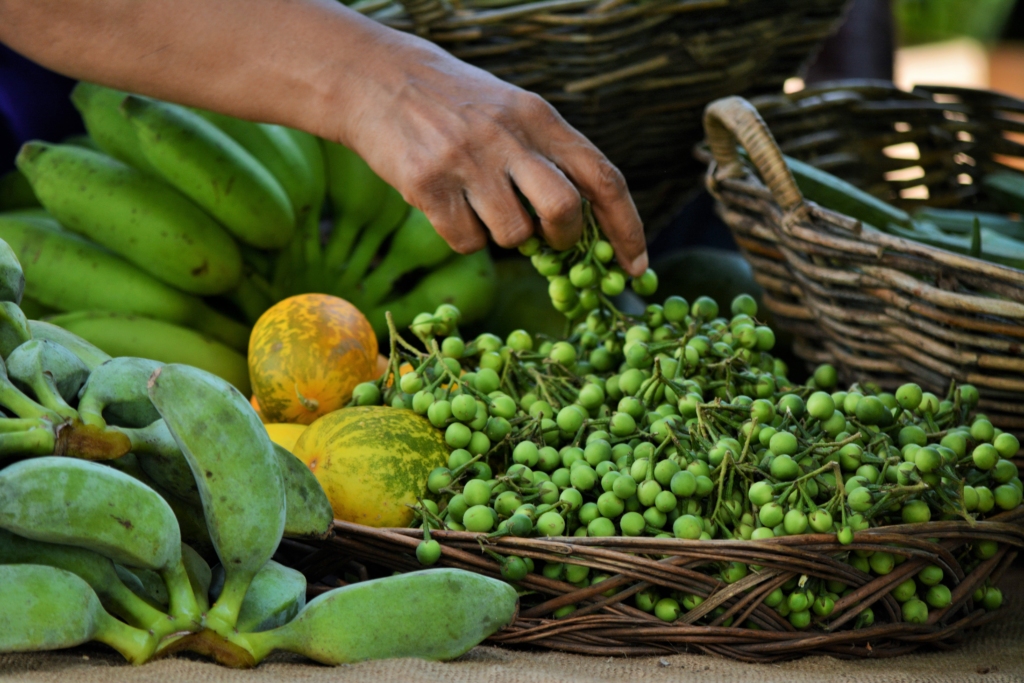
The business is deliberately located in a rural area, to serve as an example of how our modern ways of life can be connected to traditional rural lifestyles. It is a place people from the city can visit on the weekend to relax while spending time out in nature. Chisa even describes a movement among younger generations – people in their 30s and 40s – who feel overwhelmed by urban life and choose to move to more rural areas. Nowadays, moving back to the countryside is easier, as many people work remotely, and Chisa notes that there are already some who have recently settled down on the area. With a few of these “new generation” residents, she has collaborated on small agricultural projects and other community initiatives.
Building her business over the past five years has opened doors for Chisa, and when asked about her future plans, she explains that establishing her shop and tea shop was only the first step. At the shop, people normally spend between 20 minutes and two hours. This initial interaction can serve as an introduction to the ideas behind Amrita. Yet, building a deeper connection and fostering a sense of community needs more time. To further connect people and help them rediscover Buddhist traditions, Chisa is planning to open an Amrita retreat in the area. A place that is based on the business’s values where people can relax for a couple of days, enjoy nature, and practice mindfulness. She says that for her it is about moving forward slowly but steadily. “Similar to our lives, we cannot do the big, big things from the beginning, we need to learn step by step.” Taking this next step will take her engagement further and will help to strengthen the connection between the monastics and the laypeople within the local community.