A Breath of Fresh Air: Where Science Meets Spirituality
by Linus Dolfini
Bangkok, June 26, 2026
This article is based on an interview with Hongbai Zhu, a Chinese high school student from Beijing who has committed himself to promoting sustainable and healthy alternatives to the widespread traditional incense.
Our meeting with Hongbai Zhu takes place via Zoom on a Sunday morning in mid-June. Hongbai is a Beijing-based high school student majoring in chemistry and religious studies who has begun developing his own initiative to create healthier, more eco-friendly formulas for incense sticks – an everyday item widely used in Chinese temples, public buildings, and homes. According to Hongbai, his own family, like most Chinese families today, does not actively follow any religion or participate in religious practices. However, his studies in religious education have sparked a deep interest in exploring the traditions of different faiths such as Buddhism or Christianity. In his free time, he enjoys visiting temples and churches, learning about their histories and practices, and connecting with people from diverse backgrounds. It was this curiosity, combined with his knowledge as a chemistry student, that ultimately inspired his work on sustainable incense.
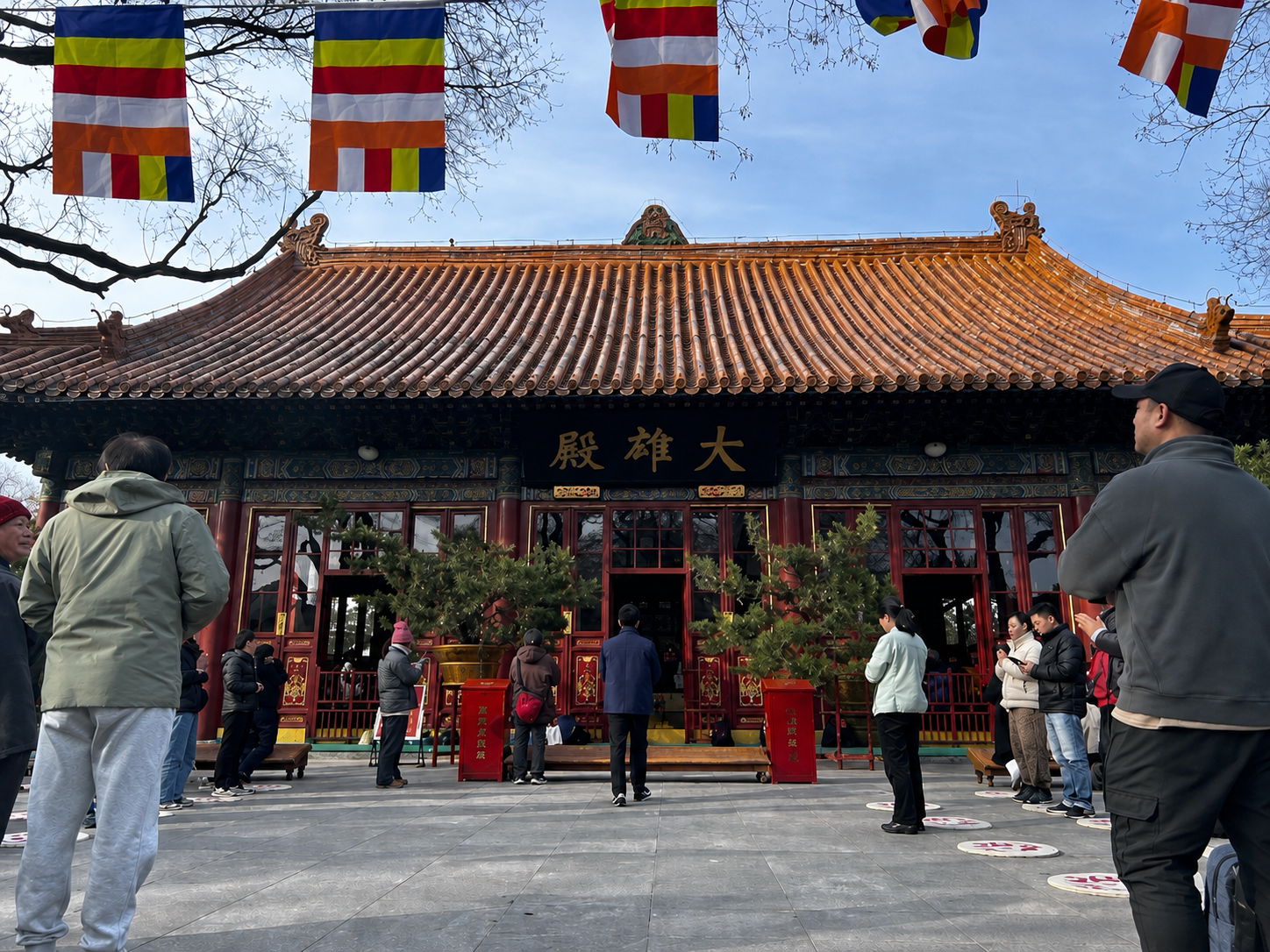
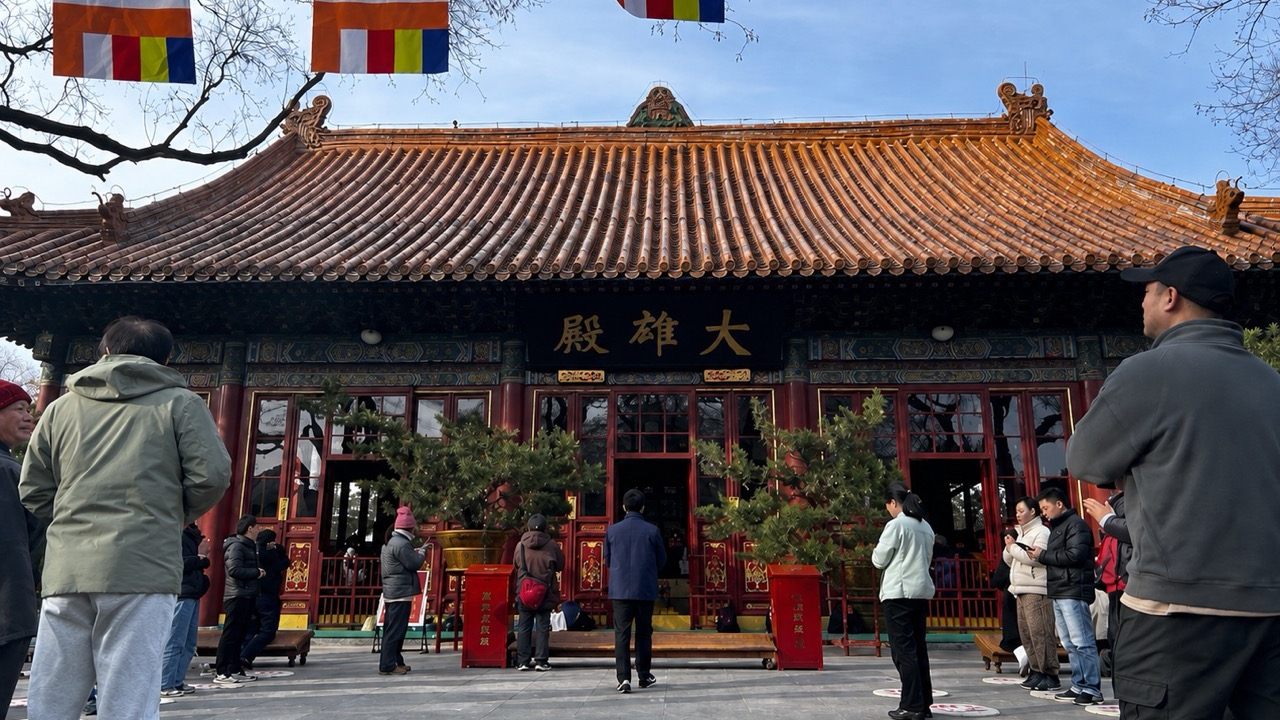
The idea for his project emerged while he was visiting a local temple in Beijing. Upon entering the temple, Hongbai realized that a dense smoke was covering the interior as well as the area surrounding the temple, obstructing the view. The smoke rising from the burning incense was dense and white, which raised concerns about air quality that may affect both the health of those nearby and the surrounding environment. He decided to address this issue by trying to develop a more sustainable alternative to conventional incense, using natural materials instead of relying on synthetic chemicals. Through online research and experimenting at the school’s laboratory, he identified alternative formulas that allowed him to produce his first batch of environmentally friendly incense sticks. These new incense sticks emit fewer toxic particulates by containing natural ingredients such as calcium carbonate and bamboo charcoal powder which makes them burn more cleanly.
Hongbai explains that he would not classify himself as a believer or follower of one particular religion, yet through his studies and his personal interest he discovered certain spiritual practices that resonate with him on a personal level. As a high school student, he is all too familiar with the pressure of achieving high grades, gaining admission to prestigious universities, and competing in a demanding academic environment. Meditation offers a valuable balance, helping to calm the mind, regain focus, and restore a sense of inner stability. Hongbai believes that such practices are particularly beneficial for students, who often face intense expectations and stress. Overall, religious teachings can remind people to focus on what truly matters and to direct one’s energy toward making a meaningful difference rather than becoming consumed by external pressures. So, upon realizing the significance of the pollution that can be caused by chemical incense it was clear to him that he was in the right position to try and address this issue.
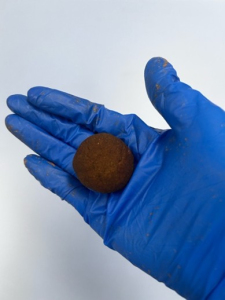 After conducting some initial research – which was also supported by his chemistry teacher – Hongbai worked at the school’s laboratory to put his new insights into practice. He conducted ratio tests with different materials such as bamboo charcoal powder, lemongrass powder and calcium carbonate, comparing the gases emitted by each of the different combinations. Measuring the emission rates without access to professional equipment proved a bit challenging. Nevertheless, Hongbai found a simple way to make an initial comparison between traditional chemical incense and his own experimental formulas. He lit the different types of incense, including traditional ones as well as his own mixtures with different ingredient ratios, in front of a sheet of white paper and recorded the smoke they produced.
 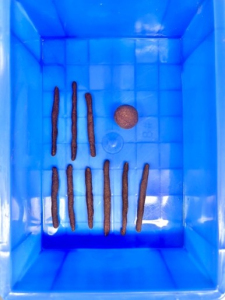 This allowed him to visually compare the amount and density of the emissions from each sample. While some emitted a lot of light gray smoke – a clear sign of unhealthy and unsustainable emissions – others burn with little to no visible emissions which in turn is a strong indicator of the effectiveness of that ratio. Another way to detect and compare the different gases was to burn each incense next to a jar of calcium hydroxide. Once the sulfur dioxide – which is one of the harmful gases emitted by burning traditional incense – enters calcium hydroxide in its liquid state, it forms a white compound that does not dissolve, therefore indicating how clean the emissions are. By comparing the traditional formula to his own formula, Hongbai discovered that his newly developed incense emits much less sulfur dioxide compared to the commonly used ones.
One of the challenges when producing this new eco-friendly incense has turned out to be including different fragrances. This is due to the fact that many fragrances contain high amounts of lignin, an aromatic biopolymer, so these fragrances emit Volatile Organic Compounds (VOCs) when they are burned. VOCs are a category of carbon-based chemicals, many of which are harmful. So, when trying to create fragrant incense, it is important to only use powders with limited amounts of lignin. As a result, the range of fragrances that can be incorporated into these new incense formulations is currently limited.
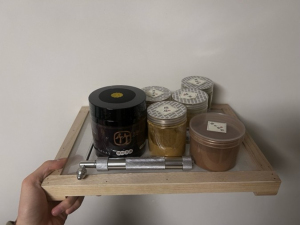 Currently, Hongbai is developing this initiative on his own. Alongside school and homework, he typically dedicates around five hours each week to his research and experimentation. At times, however, especially when conducting in-depth research or documenting his work on video, he spends an entire day or even a full weekend on the project. His dedication has already led to some promising results. His school has been very supportive of his commitment and by keeping them informed on his progress, as the teaching assistant of his high school’s chemistry competition class he led a hands-on workshop for other students, teaching them how to produce these new alternative incense sticks. He also approached the school’s administration to explain the health and environmental benefits of using eco-friendly incense instead of conventional alternatives. He provided the school with 60 of his new handmade incense sticks, which were placed in the school bathrooms to replace the commonly used chemical ones and to test their effectiveness. Hongbai explains that burning incense is not only something that takes place at temples and their use is not necessarily connected to religious activities. Instead, the use of incense is widespread in Chinese households as well as public buildings – such as schools – where they are commonly placed to freshen the air. Developing new formulas for incense sticks is therefore not only beneficial for the environment but also for public health. It has recently been proven by numerous studies that exposure to incense over time can increase the risk of cancer due to the emission of harmful fine particulate matter (PM2.5) as well as other gases such as the above-mentioned sulfur dioxide that can be found in cigarette smoke.
Temples as religious institutions are not as important as they used to be in contemporary China and their roles in society can be compared to those of Catholic and Protestant churches in Europe. Chinese people in general are still influenced by Buddhist traditions just as Christian traditions are still important in European countries and the religious heritage has not completely disappeared despite the society becoming more secular. However, most Chinese people do not visit places of worship such as temples regularly in order to practice a religion. Many temples have become places of cultural heritage, some now famous tourist attractions which are mostly visited on an irregular basis by tourists and people who want to pray for good luck when facing significant life events.
The temple that initially inspired Hongbai to create his own initiative was very receptive when he first contacted them to introduce his project and explain that he would like to support them in addressing the pollution issue they face on their grounds. In fact, the temple confirmed that they would like to try out some of the new incense to test their effectiveness. For Hongbai supplying the temple is another big step. So far, he has been producing incense on his own by hand using tools he acquired specifically for that purpose. Now he is looking for producers that could handle a big order and mass-produce incense according to the formula he has developed. Supplying the temple with incense would require him to be able to send them up to 1000 sticks, an amount that is too large for one person to produce by hand. As soon as he finds a producer, he would like to reach out to other temples and religious institutions to convince them of the benefits of sustainable products and further spread his idea. Hongbai states that he plans to expand the initiative throughout his studies to hopefully create partnerships beyond Beijing to other parts of China as well as countries like Japan and Thailand.