
Exploring the Connection Between Buddhism and Ecology
by Linus Dolfini
Bangkok, May 27, 2026
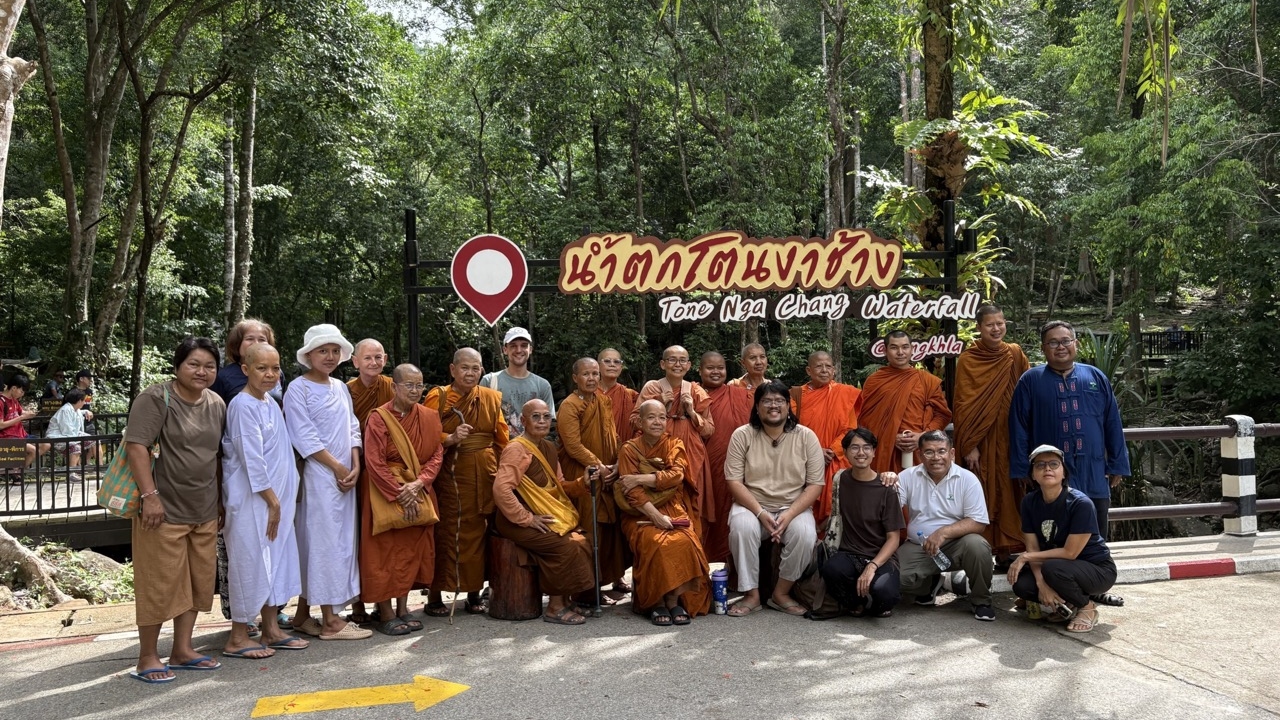
From May 10th to May 16th, the Eco-Temple team from the INEB Secretariat in Bangkok traveled to the South of Thailand to join the Bhikkhunis of the Thippayasathan Dhamma Arama on Koh Yor, near Hat Yai, in conducting the first ever edition of the Eco-Dharma Camp. The main intention behind the camp was to strengthen connections among INEB members and monastics living in Thailand while exploring the deeply interconnected relationship between Buddhism and ecology.
At the heart of the camp was the understanding that Buddhism cannot be fully practiced without engagement. The teachings are not meant to be applied only inwardly through meditation and mindfulness in one’s personal daily life while remaining disconnected from the Dukkha present throughout the world. Buddhism must respond to the realities of society, community, and the natural environment. True wisdom emerges through genuine engagement, when personal struggles become connected with the struggles of others – from a community level to the global level – and when the state of the natural world is recognized as part of our shared existence. By acknowledging this interconnectedness and incorporating it into both practice and livelihood, the participants were able to explore a more holistic and engaged understanding of the Dharma.
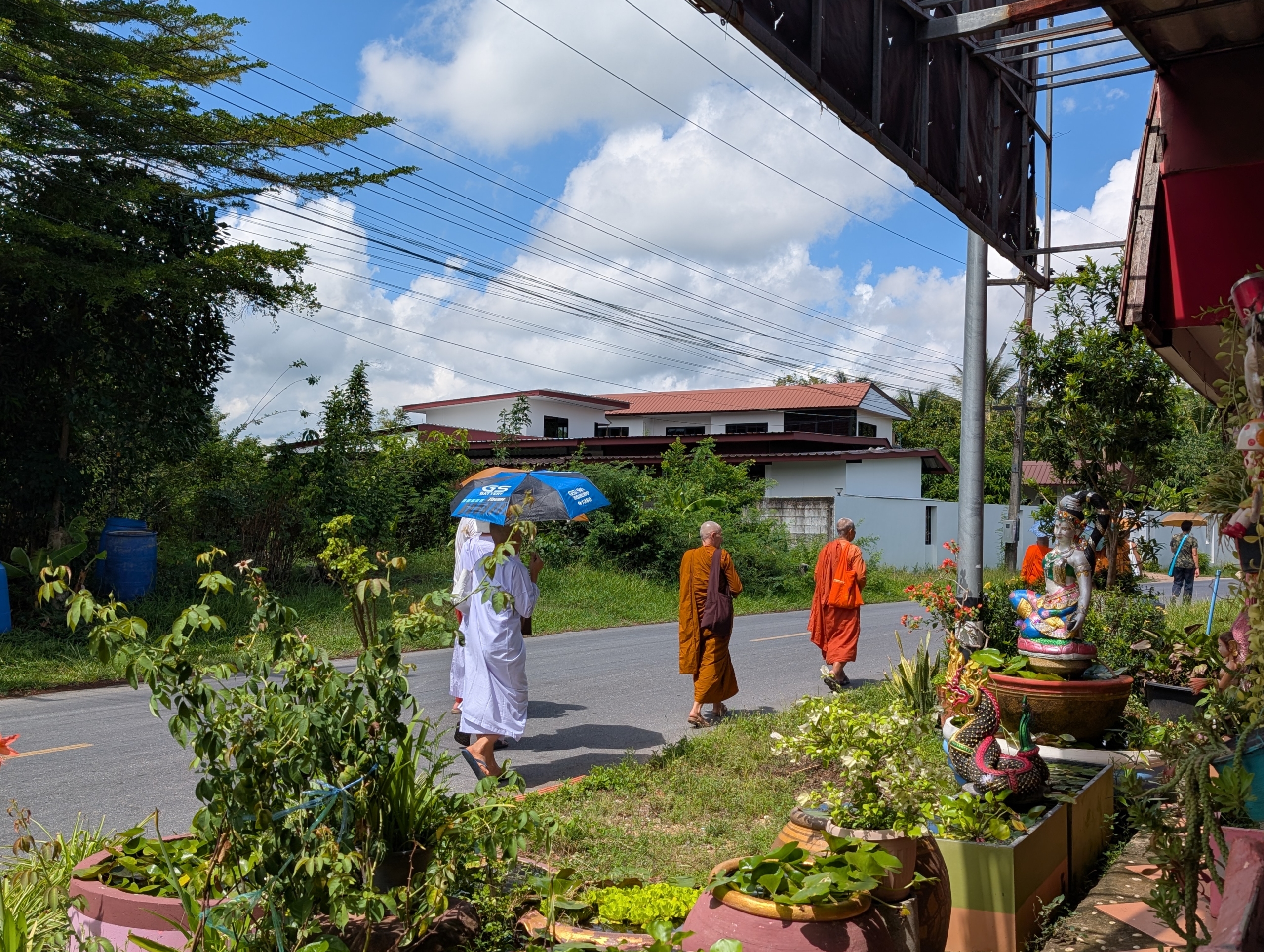
The Bhikkhuni Arama on Koh Yor is a wonderful place located in a small, quiet town along the coast of Songkhla Lake. The Bhikkhunis live a simple and self-sufficient life, with a strong emphasis on community, which made it the perfect setting for our program. Throughout the week, all the speakers and participants committed themselves to the monastic lifestyle. Most of the participants were members of the Arama itself, with two monks joining from outside. The INEB team travelled from Bangkok while guest speakers came from all across Thailand.
The accommodations were small, stilted huts that provided just enough space for one person to lie down. Everyone shared communal showers and bathrooms, and the huts and the meeting rooms were cooled only by fans. Meals were eaten together as a community; some of the food was prepared by the Bhikkhunis themselves, while the rest was collected during the traditional morning alms round. This simple way of living set the right tone for the entire camp, allowing everyone to focus on what truly mattered: practicing the spiritual teachings and building genuine connections among the members of the Eco-Dharma Camp.
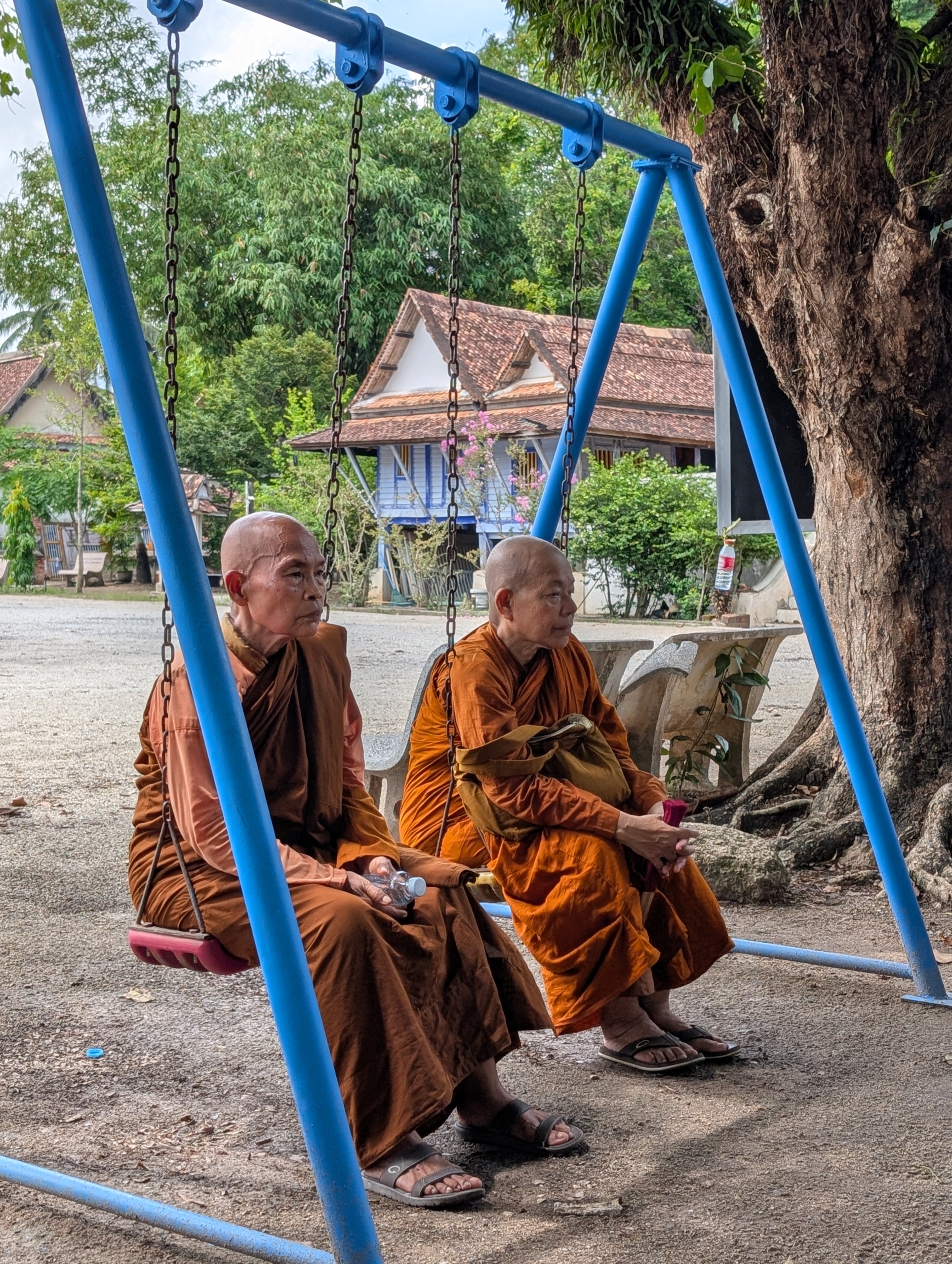 Everyone who joined the program benefited greatly from the experience, gaining exposure to new concepts and perspectives that broadened their understanding of both Buddhism and ecology. As one Bhikkhuni reflected, “one of the wonderful things about contributing to this network of people is that we all come from a Buddhist tradition.” Sharing this foundation created a unique space for dialogue, allowing participants to exchange their understandings of our world combined with the knowledges and experiences each person had cultivated throughout their lives. Sharing a spiritual foundation also shaped the way participants approached issues such as the climate emergency. Rather than falling into despair or wallowing in lost hopes, Buddhism offers an awareness of the natural cycles through which all things arise, flourish, decline, and eventually fade away. Within this understanding of impermanence, there is a certain sense of comfort and balance. However, it is important to state that at the same time, the Buddhist perspective is far from indifferent to the condition of the world; on the contrary, it carries a deep concern for the suffering experienced by both humanity and the natural environment. Through the lens of Buddhist philosophy, much of this suffering can be understood as arising from the “three poisons”: attachment, aversion, and delusion. Reflecting on these root causes helps practitioners engage with the world in a grounded and compassionate way, without becoming overwhelmed by its difficulties. This approach encourages practitioners to look both outward and inward. While recognizing the suffering and crises present in our world and the root causes that lead to them, Buddhist practitioners also search for these causes within themselves and try to eradicate them on a personal level. This connection between the inner and outer world is extremely important as it will ultimately lead to a more calm, balanced, and clear view of all the developments around us.
For these reasons, the program connected theoretical and practical lessons on ecology with daily spiritual practice. The first day focused on the relationship between inner and outer ecology, encouraging participants to experience the natural environment mindfully through all five senses and to reflect on the connections between humans and their surroundings, the body’s response to being in nature, and the influence it has on one’s state of mind.
When we later returned to the classroom, we also had the pleasure of listening to Phra Napan of the Institute of Buddhist Management for Happiness and Peace (IBHAP) explores his work in climate campaigning. Phra Napan has a strong foundation from which he melds together the role of monk and activist, speaking up for climate and sustainability issues on the international stage. He attributes this work to a very important skill: storytelling, where knowing how the message needs to be conveyed is just as (if not more) important than the message itself. This is especially true when we need to consider the context of the speaker and their audience, like in the case of monastic leaders.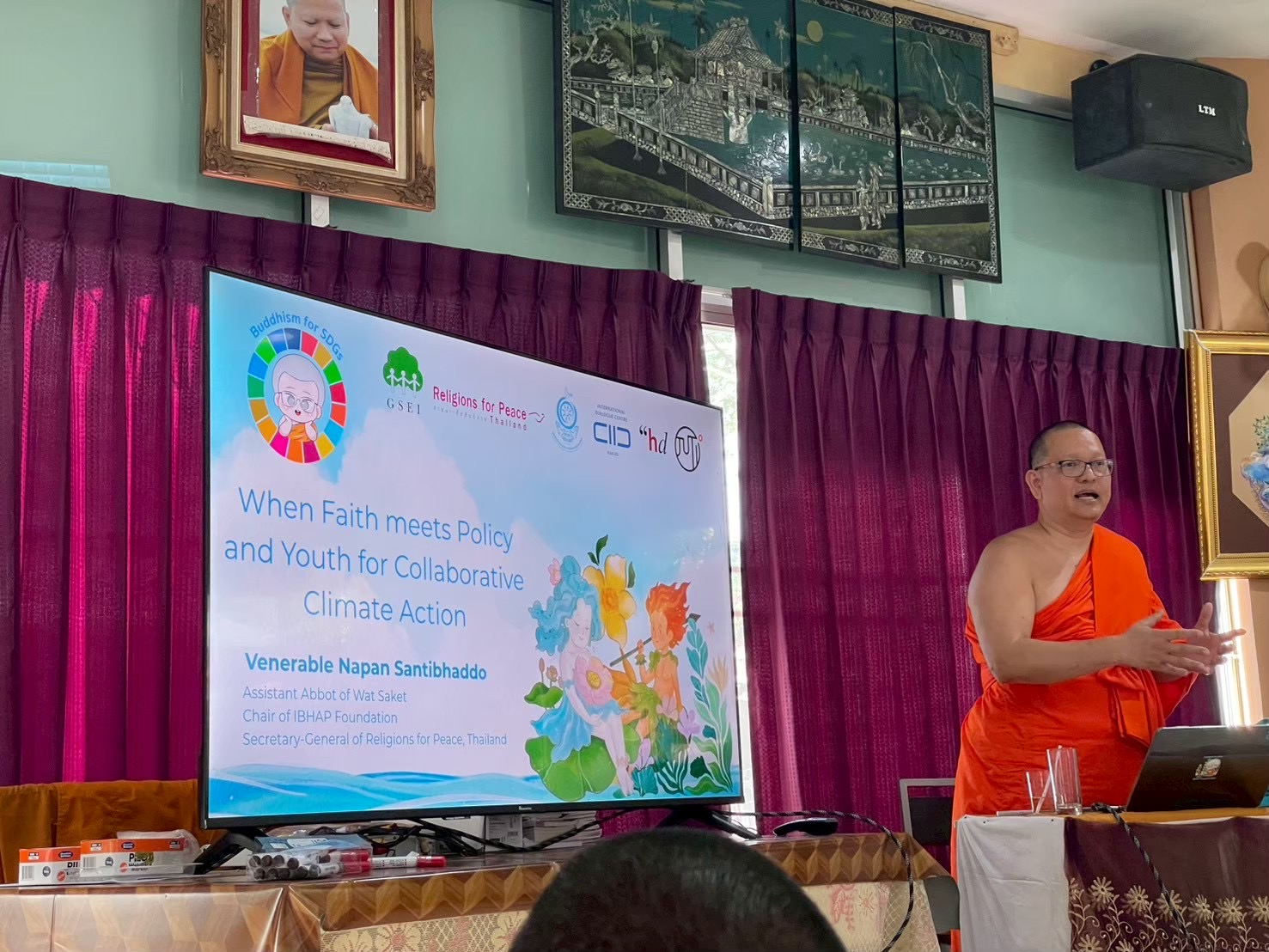
The second day explored sustainable livelihood practices for rural communities that do not rely on harming the natural environment, particularly forests. Throughout this session, guest speakers from the Thai Rak Pa Foundation shared valuable insights from their work in forest protection and community engagement.
The third day included a practical workshop in which participants explored simple, affordable, and environmentally friendly ways to produce fertilizer and cleaning materials. This session was especially valuable for the Bhikkhus and Bhikkhunis, as local monasteries – especially ones led by female monastics – often operate with limited financial resources, unlike larger temples in cities such as Bangkok or Chiang Mai. Hence, affordability is an essential aspect of sustainable living for smaller institutions. The workshop resonated with the Bhikkhunis for another reason as well. Their Arama as well as the surrounding communities were severely affected by flooding last year when heavy rainfalls caused Songkhla Lake to overflow. Drawing from this experience, they emphasized the importance of cleaning materials in the aftermath of natural disasters. While emergency assistance often ensures sufficient access to food and fresh water during the crisis itself, the greater challenge begins once the floodwaters recede and aid responders depart, leaving communities to manage extensive cleaning and infrastructure repairs on their own.
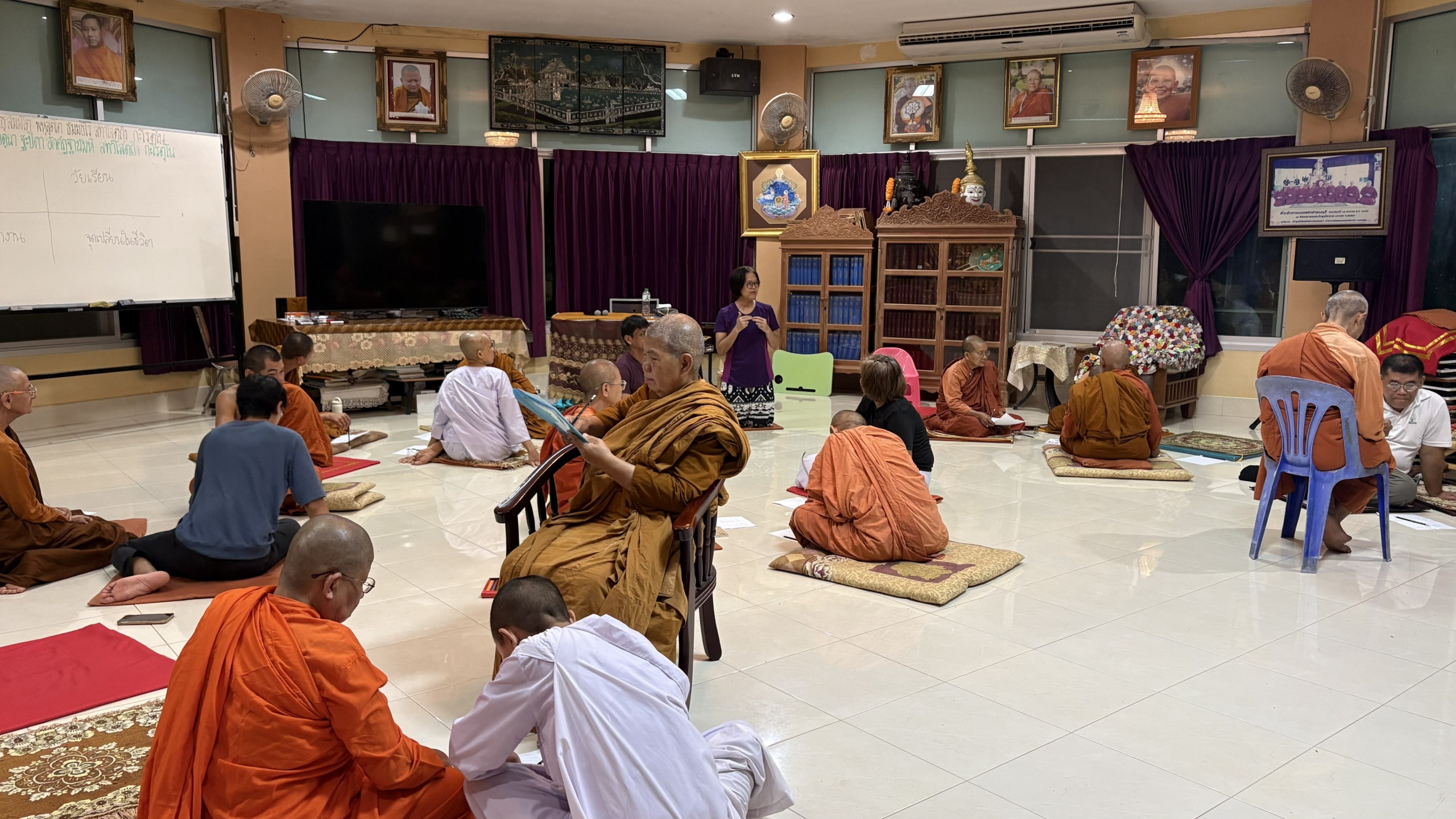
The fourth day focused on environmental campaigning and was led by a representative from Greenpeace Thailand. The session aimed to provide participants with a better understanding of effective communication strategies and how environmental campaigns can develop narratives that resonate with the public while supporting their broader goals. In the context of Thailand, much of the messaging still needs to address the basic realities of climate change, such as raising awareness of how climate change contributes to extreme weather events like increasingly heavy and irregular rainfall, which in turn leads to severe flooding.
The success of the program largely came from the integration of the workshop components into everyday monastic life, with guest speakers, organizers, and outside participants invited to join the Bhikkhunis in their daily activities such as morning chanting, the morning alms round, meditation practices, and Dharma talks held before breakfast and lunch. Although the discussions often took place on an intellectual level, the Buddhist practices helped participants remain grounded and engage with the topics on a deeper, more experiential level while critically reflecting on the concepts being discussed. At the same time the sessions were not only based on discussions but included hands-on practices as well. Through this immersive approach, the Eco-Dharma Camp managed to successfully bring together its two central themes – ecology and Buddhism – allowing them to intersect on practical, spiritual, and intellectual levels.

